
Tutoring
In Support of the Liberal Democrats’ Plan for Extensive and Targeted Tutoring
25 September 2023
Over the weekend, the Liberal Democrats unveiled a plan to provide free small-group tutoring for 1.75 million pupils struggling with their studies. The initiative, they believe, will help address a concerning statistic: more than one in seven teenagers in the UK falls behind in English or Maths during their secondary school years.
The party’s education spokesperson, Munira Wilson MP, revealed that at the heart of this plan is a commitment to fill the void left by the National Tutoring Programme, which is set to end next year.
Tutoring as a permanent fixture
As an education charity that has provided tutoring support to pupils facing disadvantage over the last twelve years, we are delighted that the Liberal Democrats have announced plans to make school-based tutoring a permanent fixture in England, especially targeting those that need it the most.
Their announcement draws heavily on the recommendations laid out in the Future of Tutoring report published this summer, led by Public First and sponsored by Action Tutoring, Get Further, and The Tutor Trust. In particular, it focuses on:
- Removing the need for schools to match fund (a barrier to current take-up)
- Long-term funding to enable schools and providers to plan
- Allowing for a mixture of school-led tutoring and external partner provision
- Supporting all pupil premium pupils who are behind academically
Levelling the playing field
Responding to the announcement, Susannah Hardyman, founder and CEO of Action Tutoring, said:
“Tutoring is one of the best-evidenced ways of supporting disadvantaged young people to achieve academically, levelling the playing field between those that can afford private tutoring and those that can’t. The benefits of tutoring extend beyond just academic attainment, with evidence highlighting that it also increases wider confidence, motivation, and engagement in education.”
The Liberal Democrat’s proposal includes making tutoring a permanent fixture in England’s schools, sixth forms, and further education colleges. These institutions would receive a substantial annual budget of £390 million, earmarked for intensive small-group tutoring sessions designed to assist struggling pupils from disadvantaged backgrounds. The subjects covered include English, Maths, Science, and other academic areas.

Targeted approach
One of the applaudable principles of this initiative is its targeted approach. Pupils who would benefit from tutoring will be selected with a focus on children from low-income backgrounds, those with low prior attainment, and those with additional educational needs. Wilson explained that flexibility will be paramount, allowing schools and colleges to choose between using their own teaching staff, recruiting tutors independently, or selecting from quality-assured external providers.
Wilson criticised the government’s investment in education, particularly during the pandemic, stating that only a fraction of the announced £15 billion investment in education to bridge the learning gap caused by the pandemic was allocated. She passionately emphasised the need for this initiative, stating:
“Tutoring will no longer be something that only an elite few can afford.”
Unlocking potential
In a world where education holds the key to a brighter future, the Liberal Democrats’ commitment to accessible and effective tutoring represents a pivotal step towards realising the full potential of the country’s young minds. With inclusivity, collaboration, and evidence-based strategies at its core, this initiative has the potential to reshape the educational landscape for the better, providing every child with the opportunity to thrive.
“Tutoring unlocks the potential of children and young people, which ultimately benefits not only their future but wider society too,”
‘Thank You’ notes that melted our hearts last term
15 September 2023
One of the reasons why working with children is fulfilling is that you get to see them grow, learn and develop every single time. The endless energy, creativity and playfulness they exude always brings joy and excitement.
However, working with children isn’t all rosy. Sometimes we have to manage their energy, brutal honesty, and humour. But these challenges are outweighed by the rewards of watching pupils grow in subject knowledge and confidence.
At the end of each term or school programme, a heart-warming moment for many of our volunteers and staff is when pupils share inspiring and engaging thank-you notes of appreciation.
Here are ten of the remarkable notes of gratitude from pupils who were supported by our volunteers and programme team last term:
1. What a blast!

2. Experience the magic 24/7

3. Who wouldn’t like a PS5 as a reward?

4. Missing Kitty

A tell-all with express permission

6. Cheers to behavioural change!

7. They who laughs last, laughs best?

8. Choosing to learn over biscuits

9. The heart emoji keeps filling up

10. Football rivalry knows no boundaries!

Another amazing year together ahead
These words of appreciation and witnessing a pupil progress from strength to strength are why we do what we do. To all of our volunteer tutors, we want to say thank you for your selflessness and dedication. You make a real difference in the lives of children, and we are so grateful for your service.
With the 2023-24 new academic year starting in earnest, we look forward to another great year of supporting pupils together and some fun thank you notes.
If you are interested in becoming a volunteer tutor, find out more in the link below.
New report underscores tutoring’s impact on attainment, attendance and mental health
12 July 2023
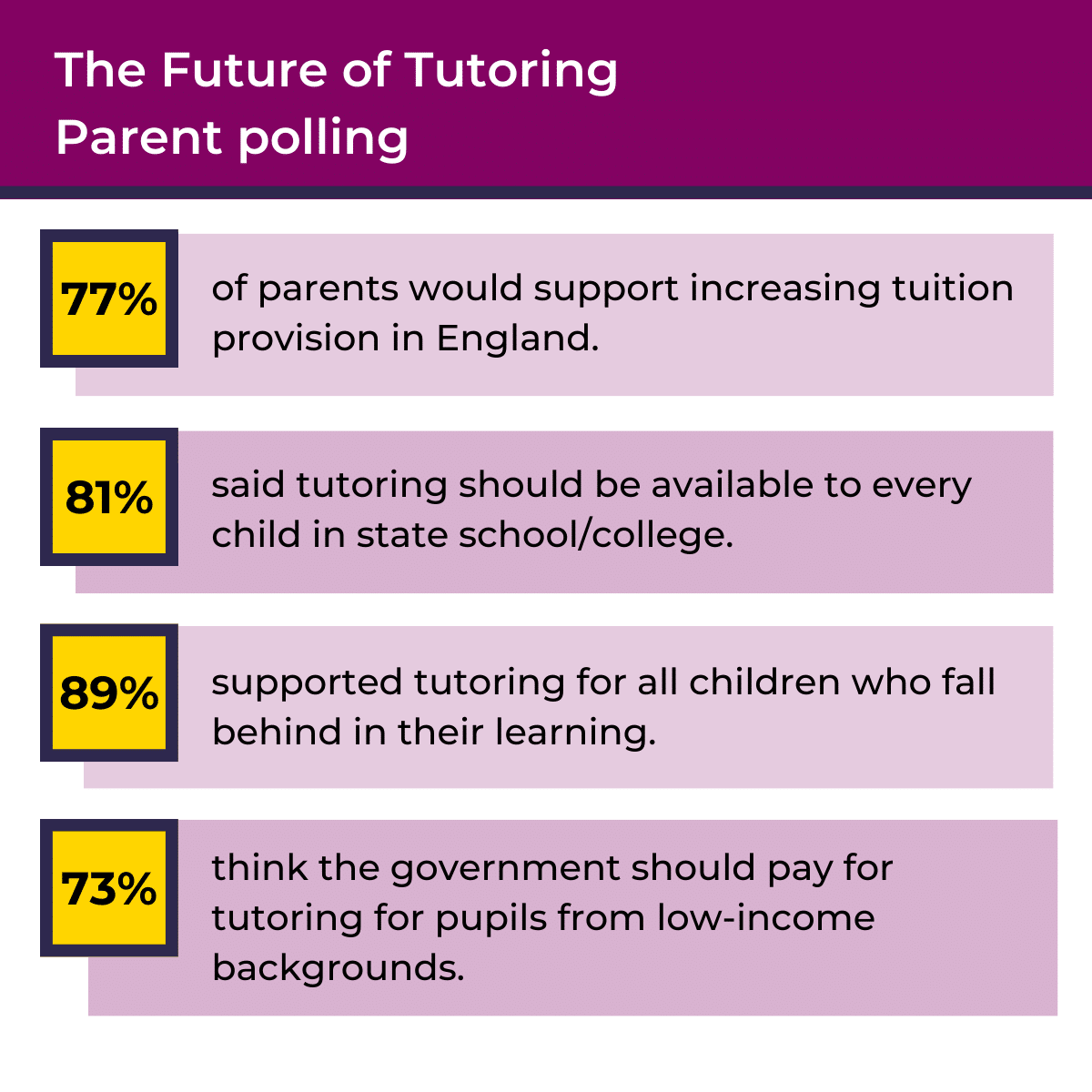
Tutoring has a wide-reaching, positive impact on the academic performance, attendance and mental health of young people, according to new polling of parents, teachers and pupils in a new tuition advocacy report published today.
The report, The Future of Tutoring, is produced by Public First and commissioned by the Tuition Advocacy Group of the Fair Education Alliance to highlight the impact, progress, and challenges of tutoring from the perspectives of parents, teachers, and pupils, plus recommendations for effective tutoring for the future and a commitment to embedding it in the education system beyond the National Tutoring Programme (NTP), set to end in 2024.
“This report, like many others, has again attested to tutoring as a central plank in education recovery efforts, with parents as well as teachers confirming the significant progress in the performance and confidence of their children receiving tutoring support. More than ever, long-term funding for the National Tutoring Programme is needed to make tutoring a permanent fixture in the education system in order to tackle the widening attainment gap and persistent absence, and to help chart a better future for all young people across the country.”
Susannah Hardyman, FEA Tuition Advocacy Group Chair and founder and CEO of Action Tutoring, a key sponsor of the report, said
Launch event
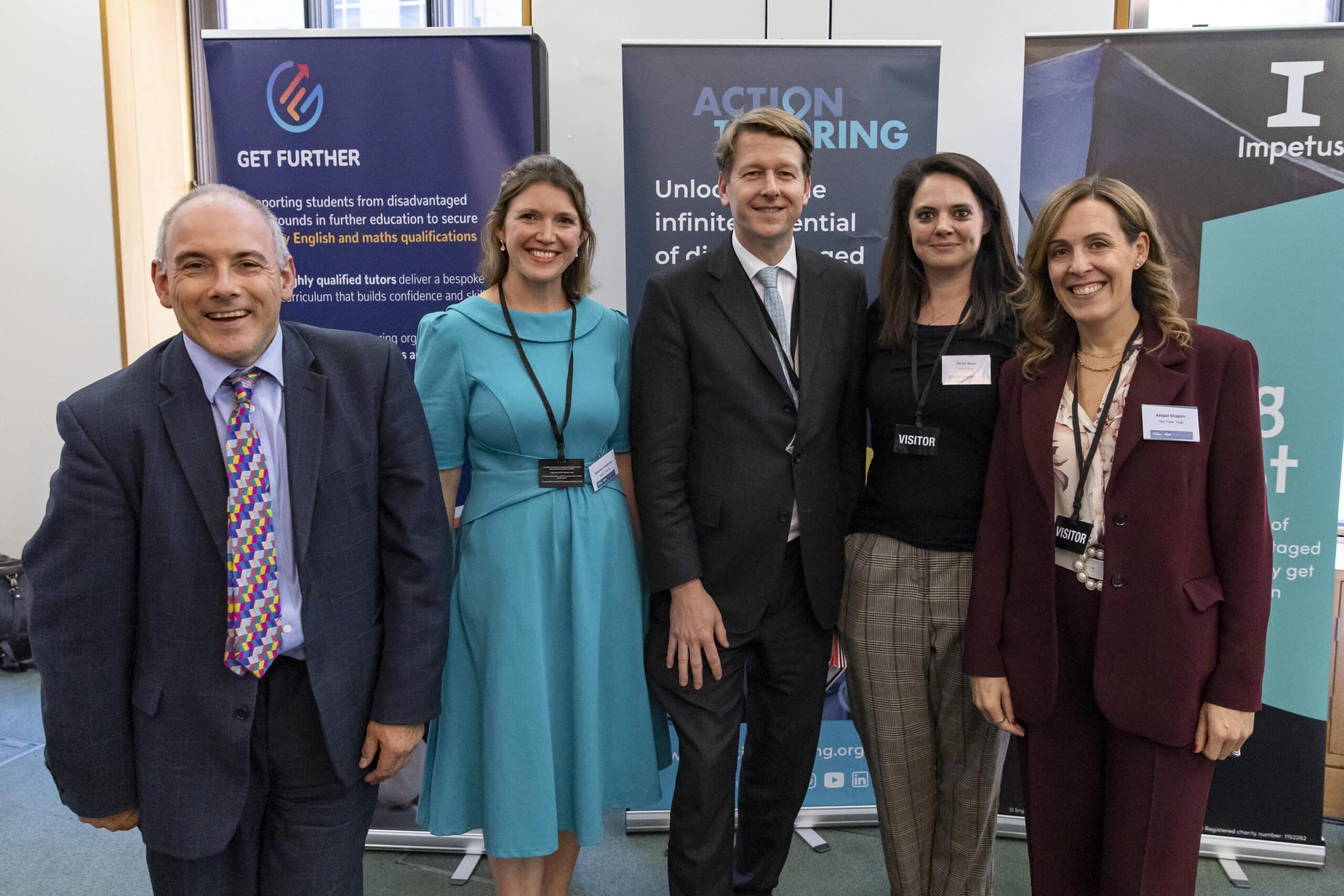
The coalition led by Action Tutoring, Impetus, The Tutor Trust, and Get Further launched the report in Parliament Wednesday, with Robert Halfon, Minister of State for Skills, Apprenticeships and Higher Education and Former Chair of Education Select Committee as guest speaker.
The event hosted by the Chair of the Education Select Committee, Robin Walker, convened over 120 policymakers, politicians, school leaders, and sector representatives, coinciding with the third-year anniversary of the National Tutoring Programme (NTP).
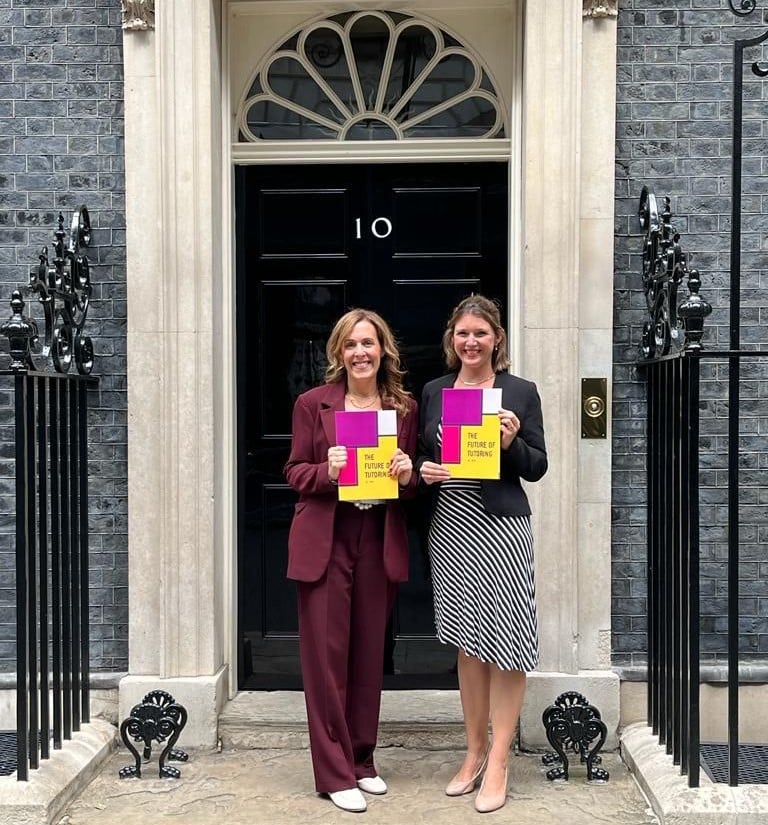
Before the event, Susannah Hardyman and Abigail Shapiro of The Tutor Trust shared the report directly with the education lead in the No.10 delivery unit.
Use momentum to transform tutoring
Speaking in the stead of the SoS of Education, Robert Halfon, former chair of the Education Select Committee and current Minister of State for Skills, Apprenticeships and Higher Education said he personally benefitted from tutoring as a child and understands the transformation it can have first-hand.
“Tutoring doesn’t only help students academically but also increases their confidence, improve attendance, and impacts their relationships with other children. It’s not only about the subject knowledge but supporting every aspect of their lives. Let’s use the momentum built in the last 3 years to transform tutoring. We welcome recommendations in the Future of Tutoring report and will consider them carefully.”
Robert Halfon, who was a key champion of the NTP back in spring 2020
“Targeted assistance helped to bridge the gaps in my understanding to pass my maths GCSE successfully. Consistency in tutoring helped me establish my learning approach and get fresh perspectives from tutor. It instilled my confidence. I look forward to higher education in September and a future of endless possibilities.”
Naomi Spence, a graduate pupil
Bridging the haves and haves not
Naomi’s mother, Lorraine, also highlighted why tutoring should be accessed by every child.
“Should tutoring be the preserve of a select few? No. Tutoring is a bridge between the haves and haves not. Let’s support the call to action to keep tutoring in place permanently and to benefit all children.”
“Yesterday, when the Year 6 results were released, Pupil Premium children representing 50% of the school population, outperformed the non-PP pupils and exceeded the national average for all pupils. Thanks to the support they received from tutoring. However, we cannot continue with tutoring for pupils who need it without proper funding. It is difficult on a tight budget like this.”
Lisa Walker-Collins, headteacher of Stroud Green Primary School
Ambitious manifesto
The report lays out a bold tuition manifesto proposal to the next parliament to commit to a funded Tutoring Guarantee that all young people in receipt of Pupil Premium or fallen behind in education, be offered a high-quality tutoring provision to help close the attainment gap and impact an estimated 1.75m disadvantaged young people.
The tuition advocacy coalition went the extra mile to garner cross-party endorsement with senior figures including Chair of the Education Select Committee Robin Walker MP, former Education Secretary the Rt Hon. Lord Blunkett, and Liberal Democrat education spokesperson, Munira Wilson MP jointly calling for its adoption.
“It is vitally important that children and young people, particularly those from disadvantaged backgrounds, get the help they need to be able to succeed in life and play their part in improving the world around them. Tutoring is an intervention that is proven to help children catch up on lost learning and also supports their wider needs, like improving attendance and protecting mental health. Tutoring can play a central role in unlocking the ambition of England’s children if we deliver a Fair Tutoring Future.”
Dame Rachel De Souza, Children’s Commissioner for England, who wrote the report’s foreword said
“Tutoring is a vital and proven intervention for providing effective catch up support at school and, used effectively, it can make a huge difference for children’s life chances. I have seen some excellent examples of tutoring and hope that the lessons learned from the National Tutoring Programme can ensure that it is used even more effectively in the future. Embedding tutoring into the education landscape as we move forward will be vital if we are to close the gap in attainment for young people from disadvantaged backgrounds.”
Robin Walker MP, Chair of the Education Select Committee and former Schools Minister said
Key highlights from the tutoring report
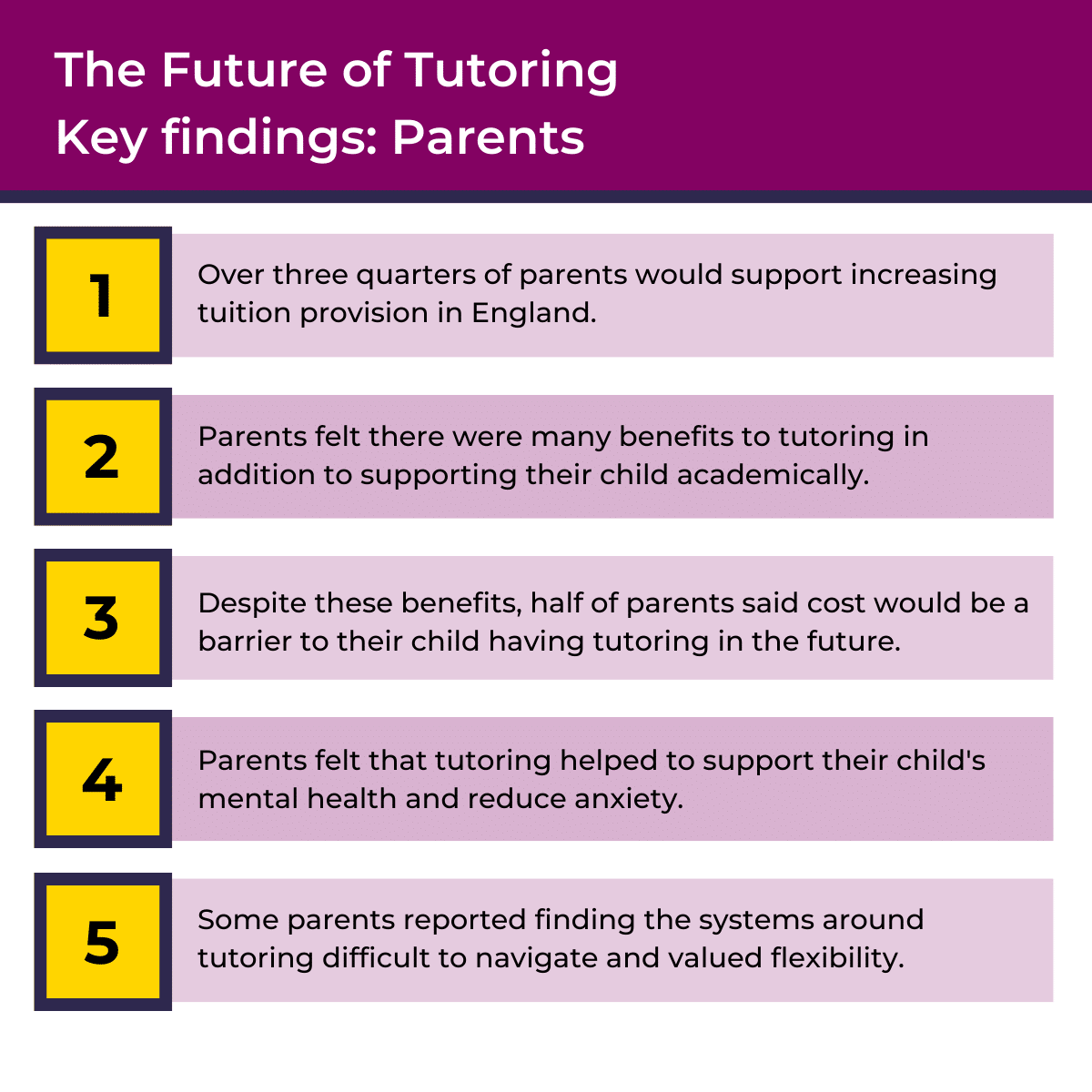
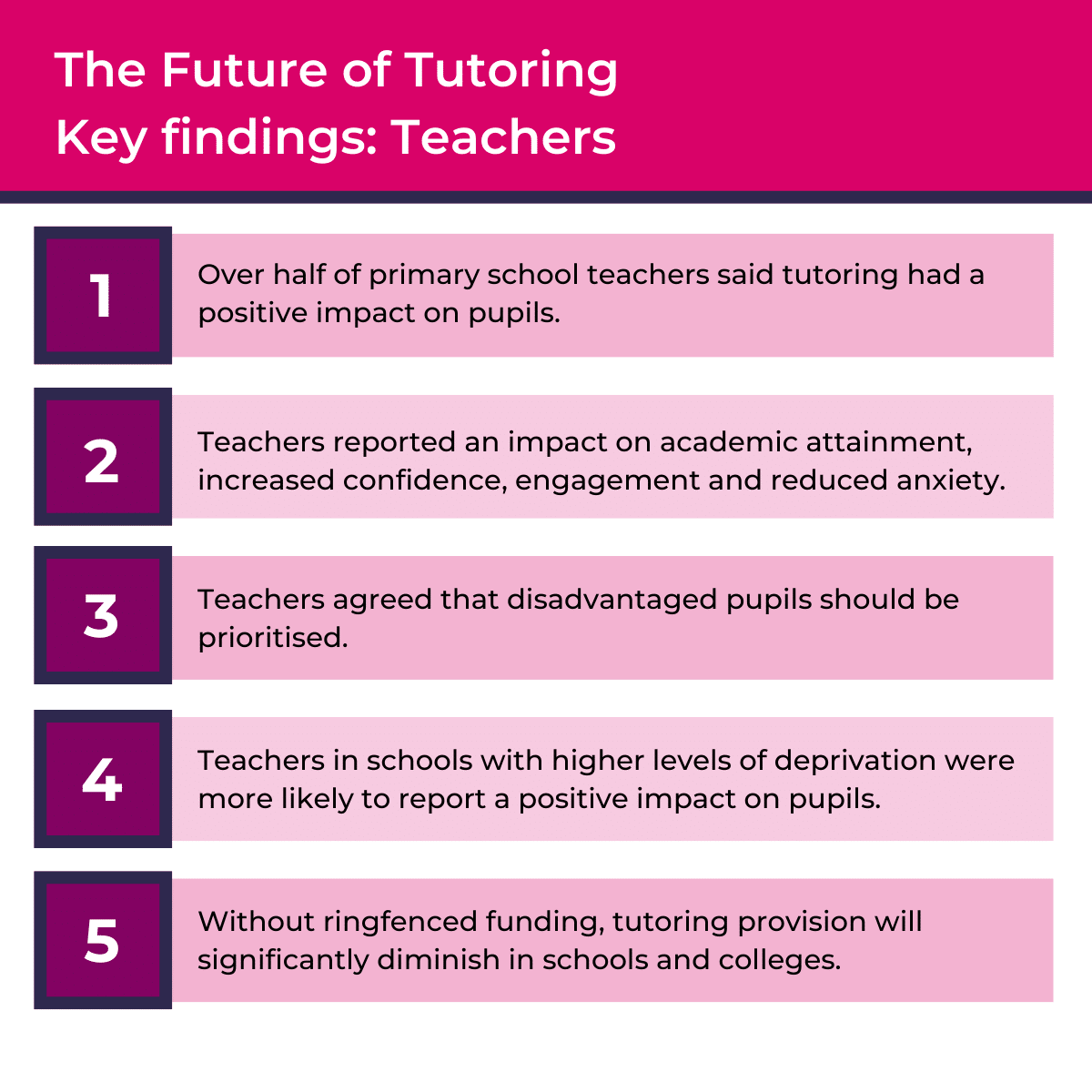
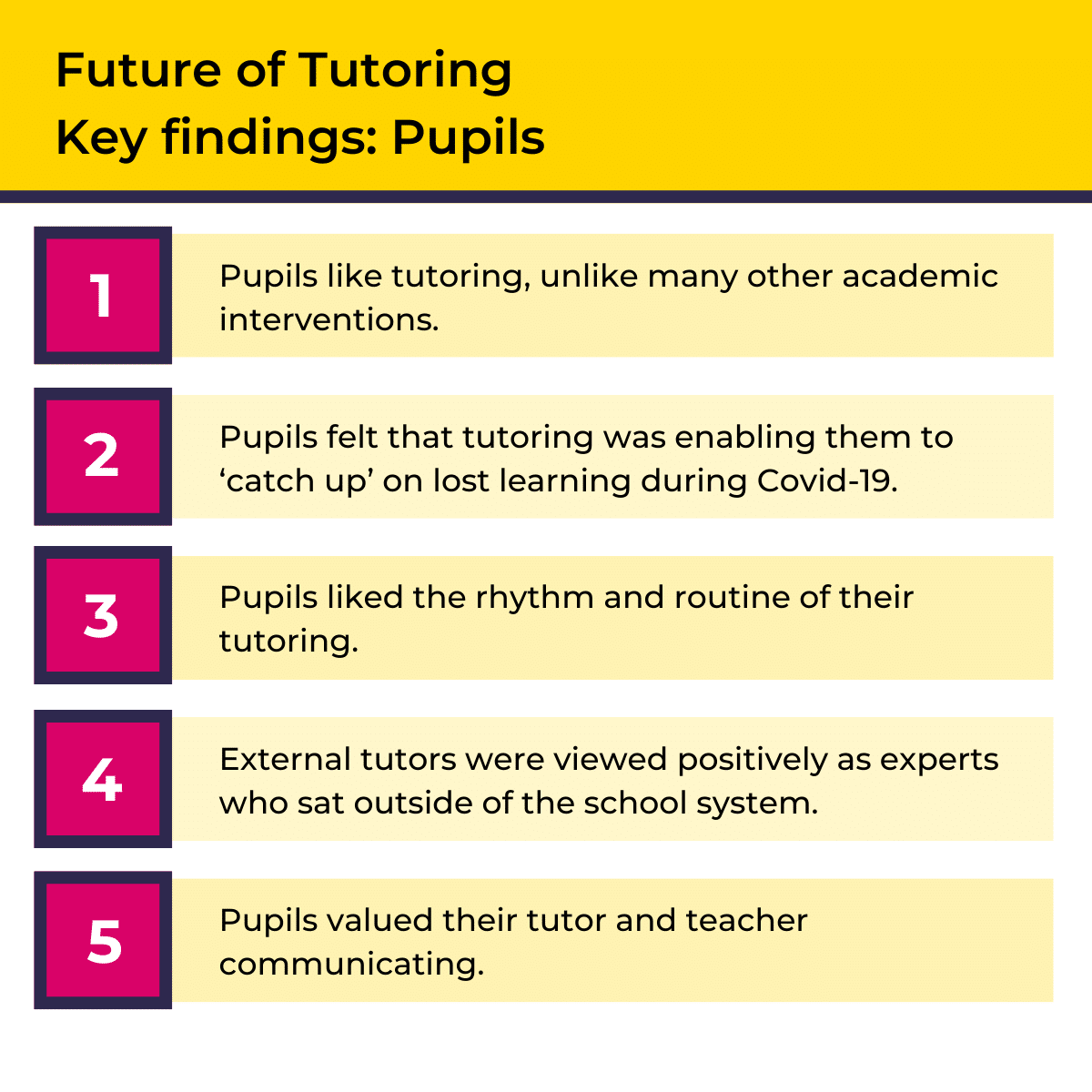
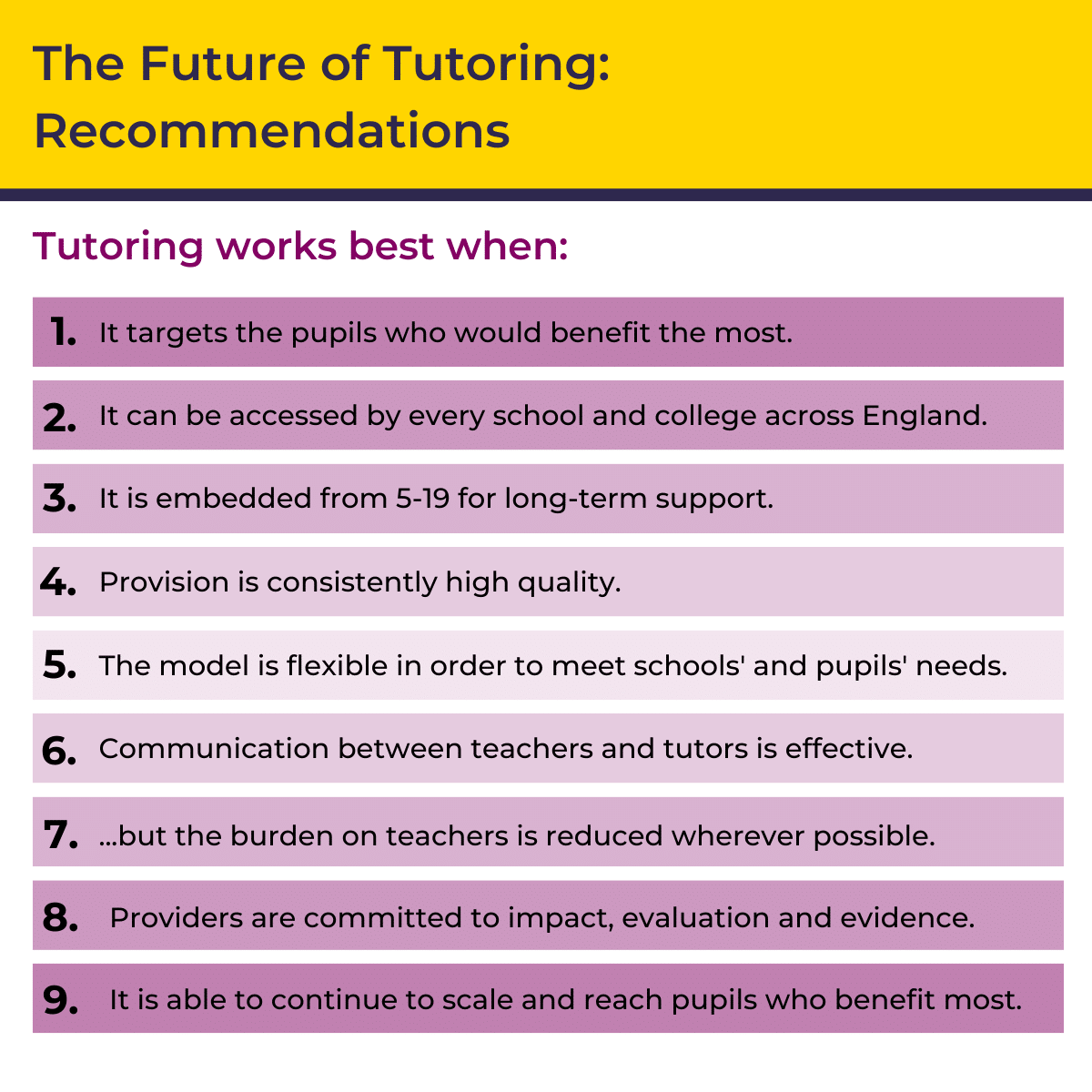
Tutoring manifesto
The manifesto is proposing an increase in state funding from £150m to £290m a year, the removal of the requirement on schools to match-fund to access any funding, creating flexibility for schools to target tuition at pupils who need will benefit, and clear accountability for the delivery and reporting status of pupils.
“A reshaped and properly invested tutoring programme is not only essential for re-engaging young people post Covid but also to provide direct equality of access to essential out-of-classroom support.”
Former Education Secretary, The Rt Hon. Lord Blunkett, said
“Young people from disadvantaged backgrounds have fallen further behind their peers during the pandemic, and are at risk of staying there unless the government reverses its decision to remove its funding for schools and colleges to use tutoring. We stand by this call for tutoring to be fully funded so that schools can support the children who have suffered most during the pandemic to reach their full potential.”
Munira Wilson MP, Liberal Democrat spokesperson for education said
Continuing our advocacy work
Action Tutoring is proud to be at the forefront of this collective advocacy report and to be working together with other education charities to secure the joint cross-party endorsement of the tuition manifesto from members of the main political parties.
We look forward to building on this achievement by speaking on education panels at the Conservative and Labour party conferences later this year in partnership with the Education Policy Institute (EPI) and the Centre for Social Justice (CSJ).
We believe that it’s vital we engage policy leaders and continuously advocate for cross-party support for embedding tutoring permanently in our education system to positively impact the future of young people.
Thank You Day 2023: An Ode to Volunteers
21 June 2023
Thank you to the unsung heroes of charity
When we think of superheroes, our minds often evoke images of capes, masks, and incredible superpowers. The true heroes among us aren’t necessarily blessed with X-ray vision or the ability to fly.
They are extraordinary ordinary people who selflessly give their time and efforts to causes that make a difference. Volunteers are the backbone of charitable organisations. They’re the ones who turn compassion into action, showing up day after day, ready to tackle any challenge.
From feeding the homeless to cleaning up parks, from tutoring underprivileged children to rescuing adorable furry friends, these wonderful individuals are everywhere, making an impact, one selfless act at a time.
That is why we are joining the rest of the UK to mark the third annual Thank You Day on Sunday 2nd July.
What is Thank You Day?
Thank You Day began with a handful of organisations looking for a way to say a huge ‘thank you’ to everyone who helped the nation through the COVID-19 pandemic.
Since then the campaign has grown and an astounding 15 million people have taken part in Thank You Day celebrations. Last year, 61% said that taking part had made their communities feel more united.
The impact of small actions
It’s easy to get caught up in the notion that changing the world requires grand gestures or infinite resources. But small actions can create profound ripples of positive change. Even the tiniest effort can make someone’s day a little brighter.
Whether it’s a heartfelt smile, a warm hug, spending an hour to support a young person or a simple “How can I help?”, these unsung heroes understand that the impact of their actions extends far beyond what meets the eye. Their dedication, combined with their unwavering belief in the power of compassion, transforms communities and touches lives in truly immeasurable ways.

The timeless gift of time
Imagine a world where everyone was too busy for kindness. Luckily, volunteers graciously donate their most precious resource – their time – to make a difference. Amidst their responsibilities and commitments, these extraordinary individuals carve out moments to lend a helping hand, becoming the living embodiment of the saying, “time is the most valuable gift.”
From organising food drives to planting trees, from tutoring pupils to comforting the lonely, volunteers invest their time to improve the lives of others. They are like time travellers, moving between the past, present, and future to create a better world for all. Their acts of kindness ripple through time, leaving a lasting impact that resonates with the souls they touch.
The magic of connection
Volunteers possess an uncanny ability to forge connections. They are the bridge builders who effortlessly bring people together, fostering a sense of community and belonging. In a world that sometimes feels disconnected, these unsung heroes have the power to create bonds that transcend barriers and unite us all.
Through their compassion, volunteers ignite a spark of hope in the hearts of those they serve. Whether it’s sharing stories, helping to solve difficult study questions, offering a listening ear, or simply offering a warm smile, they make everyone feel seen, heard, and valued.
In an era dominated by screens, volunteers remind us of the magic that unfolds when we connect with our fellow human beings on a deeper, more meaningful level.

A heartfelt thank you
So, here’s to the volunteers who keep the gears of kindness turning. Today, we express our sincerest gratitude for your unwavering spirit, your boundless energy, and your refusal to let obstacles dim your commitment to making a difference.
Thank you for donning your superhero capes without expecting recognition or applause. For reminding us that there’s always room for kindness and that we, too, can be part of something greater than ourselves. For being the quiet catalysts of change, selflessly working behind the scenes to create a better world.
To our extraordinary volunteer tutors, thank you for showing up at every session, even when the economic climate is now more challenging than ever. Thank you for spending an hour of kindness each week to support young people facing disadvantage to build a better future and brighten their lives.
As we mark Thank You Day nationally, let’s all reach out to these everyday heroes – volunteers, supportive friends, family, and colleagues to shower them with appreciation, and let them know that their efforts are noticed, valued, and cherished.
Highlights: Committee inquiry report on education recovery
7 June 2023
Today, the House of Commons Public Accounts Committee has published its inquiry report on Education Recovery in Schools in England. The report assessed the value and effectiveness of education recovery programmes in schools based on written and oral evidence.
Following the disruption to education by the Covid-19 pandemic with multiple school closures, the Department for Education (DfE) introduced a number of recovery initiatives to help pupils and schools to catch up, most notably, the National Tutoring Programme (NTP).
The Committee’s inquiry assessed the DfE’s management of the recovery programme, the effectiveness of the NTP in meeting its objective, and if the scheme was achieving value for money.
The report found that the DfE did not fully appreciate the ‘pressures schools are under as they seek to help pupils catch up’ with evidence of persistent issues of funding constraints, growing mental health needs among pupils and challenges with teacher recruitment and retention.
As one of the education charities that submitted written evidence to this inquiry, we believe in the potential of the flagship recovery scheme, the National Tutoring Programme (NTP), to help reverse the Covid-19 pandemic disruption in education.
However, we believe that this progress can only be achieved if the NTP is mainly targeted at disadvantaged pupils, tuition delivery is of high quality, funding is increased and outcomes are properly monitored.
Swift action to close the attainment gap
The report revealed that the Department for Education believes it will take a decade to return the attainment gap – which is at its widest in ten years at primary and secondary levels – to pre-pandemic levels.
“The 10-year timeline to witness pre-pandemic attainment gap level is too long and stands to ruin the life chances of millions of pupils across the country”
Susannah Hardyman, founder and CEO of Action Tutoring
It recommended that the DfE publish a plan setting out how it will reduce the disadvantage gap as quickly as possible and the expected trajectory, building on good practice.
Without swift action to consolidate and implement multiple recommendations from this report and many others to improve the NTP, there will be far-reaching consequences of learning loss to this generation in schools.
It recommended that the DfE publish a plan setting out how it will reduce the disadvantage gap as quickly as possible and the expected trajectory, building on good practice. Without swift action to consolidate and implement multiple recommendations from this report and many others to improve the NTP, there will be far-reaching consequences of learning loss to this generation in schools.
High absence rate among the disadvantaged
In the autumn and spring terms of 2021-22, the average absence rate for all pupils was 7.4%, compared with 4.5% for the same terms before the pandemic in 2018-19. For disadvantaged pupils, the rate was 10.4% in 2021-22, compared with 7.2% in 2018-19.
It is alarming that persistent pupil absence continues to pose a significant challenge to schools and the well-being of pupils, especially the disadvantaged. Without pupils attending school, their outcomes are unlikely to improve.
Our evidence to the Education Select Committee on persistent pupil absence contained helpful recommendations to tackle the issue including:
- Sharing drinks and snacks during tutoring sessions to reduce hunger
- Letters and text reminders to parents about upcoming sessions in the day
- Parent information sessions about tutoring and its benefits
- Incentives such as vouchers if pupils attend the majority of tutoring sessions
- Certificate presentation and awards in assembly at the end of programme
- Integrate attendance into the positive behaviour management system such as gaining points for their ‘house’ through attendance
The report charged the DfE to develop a better understanding of why disadvantaged pupils have higher rates of absence than others and take targeted action to reduce absence rates among them.
“Continuing to invest in ensuring the most vulnerable pupils show up in the classroom is critical to breaking the cycle of low attendance rates currently. Persistent pupil absence will give rise to a surge of problems in the future for young people if the root causes are not addressed.“
Susannah Hardyman

Funding constraints for schools
Although the steep subsidy cut for the NTP has been reversed, schools are still grappling with funding constraints and budget squeezes. Schools that are struggling to pay 40% of tutoring costs this academic year will still struggle to make up for the 50% next year.
Additional funding commitment is needed long-term to ensure tutoring is sufficiently embedded in the education system widely and particularly for pupils facing disadvantage.
Increasing take-up of NTP
It is discouraging that 13% of schools did not take up the NTP and missed out on the benefits of subsided tutoring. The DfE must ramp up its efforts through a campaign to win the hearts and minds of parents and conscientise schools on the value and moral imperative of channelling the NTP funding towards those eligible for Free School Meals.
The report urged the DfE to do more to understand why some schools are not taking part in the National Tutoring Programme and take more effective action to increase participation.
We believe the Department should work with tuition providers with demonstrated impact to expand into cold spots and areas with low uptake to ensure that every disadvantaged child in the country, regardless of where they live, can access high-quality tutoring.
Applying recommendations
The recommendations set out in the Committee’s report also include progress reports on measures for 2030 attainment targets and funding intervention when schools struggle to bolster NTP uptake.
If the proposed solutions are applied, they will have a meaningful impact on closing the attainment gap and reversing the damage done by the pandemic’s disruption to education. The NTP can elevate its reach and impact to ensure it delivers on the intended objectives of the scheme, all in the best interest of disadvantaged young people.
Championing for the future of children today
6 June 2023
Exactly 11 years ago, Action Tutoring piloted its first tutoring programme supporting 20 pupils in two secondary schools in Peckham, London. The goal was to provide tutoring to disadvantaged children who couldn’t afford the cost of private provision.
The positive feedback from pupils and volunteer tutors on the preliminary programme spurred the charity to scale up the tutoring model in state schools across the country. Fast forward to this academic year, we’ve supported over 26,000 pupils with the help of over 9,000 committed, high-quality volunteer tutors from a fascinating range of backgrounds.
As well as replicating our tutoring model in several regions across England, we’ve continued to increase our reach within London.
Today, we are launching our Champions for Children campaign, a match-funding initiative designed to support children and young people in London.
What is the Champions for Children campaign?
It’s a fundraising initiative launched in 2020 in response to the devastating effects of COVID-19 lockdowns on vulnerable children. Since then, the Champions for Children has continued to raise funds to support children across four key priority areas: Physical Health, Mental Wellbeing, Home & Community Environment and, Learning & Work Readiness
We’ve ran match-funding campaigns before, but this is our first year taking part in this fantastic campaign run by The Childhood Trust, in collaboration with The Big Give.
The Childhood Trust’s research shows that as much as 35% of London’s children live in poverty. With your support, we can help tackle this problem and reduce the effects of poverty on vulnerable young people.
Starting from 6th June, until 20th of June, we are aiming to raise £4,000 in donations to fight education inequalities in London. To further the impact, this £4,000 will be match-funded, raising our total target to £8,000. That means one donation = double the impact!
All funds raised will support our brilliant pupils t in London, as we want to celebrate where Action Tutoring started whilst combating education inequalities in the capital.
What is a match-funded campaign?
Match funding does what it says on the tin! Donations from you are matched from the pot to double the fundraised income. So, for every £1 you donate, £1 is added from our match fund. This pot has been kindly built up by generous pledgers and The Childhood Trust.

What will my donation be going towards?
Your donation will contribute towards workbooks for face-to-face sessions and headphones for online sessions so pupils can benefit from high-quality tutoring.
Some of the funds will also provide DBS checks for tutors volunteering with us in London, which is vital for safeguarding.
The minimum donation amount is £1 and the maximum is £25,000, so you are free to give an amount that suits you best.
How can I get involved?
We encourage you to get involved with the campaign in as many ways as possible! You can:
- Donate here
- Share, comment, and like related posts on our Twitter, Facebook, LinkedIn and Instagram pages
- Tell your friends and family (and anyone that’ll listen!)
With your help and donations, we will be better placed to provide support for pupils facing disadvantage in London and take several steps closer to levelling the playing field in education.
Our evidence submission: Tackling persistent absence and support for disadvantaged pupils
25 May 2023
Since the onset of Covid-19, a significant challenge for schools and other education support organisations has been persistent pupil absence. When students frequently miss school or display a pattern of irregular attendance, it can have far-reaching consequences on their academic progress, personal development, and future prospects.
In March, Action Tutoring submitted written evidence to Parliament’s Education Committee inquiry into persistent absence and support for disadvantaged pupils. The parliamentary inquiry was aimed at examining the issue of severe absences, the factors causing it and to assess the likely effectiveness of the Department of Education’s (DfE) proposed reforms on attendance, particularly for disadvantaged pupils.
As an education charity and accredited tuition provider, our submission focused on pupil engagement in tutoring sessions – pre and post-pandemic, reasons for low school attendance, the impact of tutoring programmes for disadvantaged pupils, and ways to increase attendance and engagement in schools.
Tutoring attendance and engagement
The attendance figures for Action Tutoring programmes are slightly lower than before the outbreak, mirroring national patterns. Our data showed that the Pupil Premium cohort – children receiving Free School Meals who formed 72% of our beneficiaries – had lower attendance figures.
For primary schools in the autumn of 2022, attendance at Action Tutoring sessions was 82% for Pupil Premium pupils and 86% for non-Pupil Premium pupils.
In secondary schools for the same term, attendance was 66% for Pupil Premium pupils and 72% for non-Pupil Premium pupils.
Tutoring sessions for both primary and secondary take place outside the regular school hours.
The severity of persistent absence
Persistent pupil absence goes beyond occasional absences due to an illness or family emergency. It involves students who are consistently absent without valid reasons and hence miss a substantial number of school days, often exceeding the accepted threshold.
According to the Department for Education (DfE), a pupil is identified as a persistent absentee if they miss 10% or more of their possible sessions. Nationally, over 1.7 million pupils (24.2% of all pupils) missed 10% or more of their school sessions in Autumn 2022-23, up from 23.5% the previous year. This compares to 922,566 absentee pupils before the pandemic.
The Centre for Social Justice (CSJ) School Absence Tracker has shown that the number of children who are severely absent remains at crisis levels and the situation worsens among pupils eligible for Free School Meals(FSM). In the 2021/22 academic year, the severe absence rate for pupils eligible for FSM was more than triple the rate for children not eligible for FSM.
Causes of persistent pupil absence
In our evidence submission, we mentioned that some of the causes of persistent absence may include:
- poor mental health
- illness including long-term illness or fear of infecting vulnerable family members with an illness
- chaotic home lives or factors such as additional caring responsibilities
- post-Covid fear of finding learning difficult, being demoralised, or feeling left behind
- lacking the confidence to engage in the classroom

What needs to change
Tackling persistent pupil absence requires a multi-faceted approach involving collaboration between schools, families, and communities. As a tutoring organisation that provides additional academic help to pupils, below are some strategies we believe can help improve attendance and engagement with the young people we support.
- Sharing drinks and snacks during tutoring sessions to reduce hunger
- Letters and text reminders to parents and parent information sessions about the tutoring and its benefits
- Incentives for pupils such as vouchers or free tickets to the end-of-year prom if they attend the majority of their tutoring sessions
- Pizza parties at the end of the programme
- Award ceremony or presentation of certificates in assembly at the end of the programme
- Reminders earlier in the school about their tutoring session and/or picking them up from their last lesson into tutoring sessions
- Integrate attendance into the positive behaviour management system such as gaining points for their ‘house’ through attendance
New DfE’s solutions to tackle persistent absence
Last week, the DfE published a notice on new plans to drive up attendance rates and attainment in schools.
- Expand the Attendance Hubs programme with nine new lead hub schools to support up to 600 primary, secondary, and alternative provision schools
- Expand the presence of Attendance Mentors in areas of the country with the highest levels of pupil absence from September
The proposed solutions are to build on the existing attendance strategy which includes guidance for schools, attendance data dashboard and the work of the Attendance Action Alliance.
Collaborative approach
Persistent pupil absence poses a significant challenge to schools and the well-being of students. If the issue is not addressed, the nation risks creating a lost generation which may give rise to a surge of problems in the future.
By implementing a collaborative approach that addresses the underlying causes, provides support, and fosters a positive school environment, we can begin to tackle this issue effectively to help every child to reach their full potential.
Tutoring subsidy cut reversed but schools need more funding
24 May 2023
The Department of Education (DfE) yesterday announced a major change to the planned subsidy reduction for the National Tutoring Programme (NTP) next academic year.
Originally, the current 60% subsidy support to schools was scheduled to drop to 25% beginning in the autumn term of next year. However, the DfE has reversed that policy decision and agreed to raise the subsidy to 50% for every pupil in receipt of the NTP for the academic year 2023-24.
We’re pleased that our concerns about the steep subsidy drop-off for the NTP next year have been listened to and the subsidy is being increased from 25% to 50% next year. However, we remain concerned that the reality is that schools that struggled to pay 40% of tutoring costs this academic year will still struggle to afford 50% next year.
Susannah Hardyman, founder and CEO of Action Tutoring
The Government introduced the national tutoring programme in the autumn term of 2020 to help pupils, especially those facing disadvantage, to recover from lost learning experienced during the pandemic school closures.
In the first year, the DfE funded 75% of the programme per pupil with schools expected to finance the remaining part. The subsidy was tapered to 70% in the second year before being reduced to 60% in the current third year. It was set to drop further to 25% next year until yesterday’s reversal announcement.
Fund allocation remains unchanged
Nonetheless, the DfE is not increasing the funding amount schools will receive next year for the NTP as it forecasts less demand and lower uptake of the scheme.
An amount of £150 million will be available to schools next year, despite calls for an increment in cash to cushion schools as they struggle with their already stretched budgets.
Furthermore, the overall amount of funding schools will receive for tutoring isn’t increasing, and given the current financial pressures on schools, we are concerned that this means that fewer pupils will be reached that could really benefit from the support
Susannah Hardyman
Limited impact in practice
With schools getting no extra funding, the DfE is banking on hopes that fewer pupils will receive tutoring next year but that more schools will at least make use of the funding available. In practice, the subsidy reversal without an increment in tutoring cash will have a limited impact on the number of pupils who receive tutoring in schools.
For instance, in a school that has 50 pupils in receipt of Pupil Premium:
This year they received £162 per pupil premium pupil (60% of £18 an hour x 15 hours) each. For 50 pupil premium pupils, this would give a school £8,100, which would enable 50 pupils to get 15 hours at a 60% subsidy.
However, next year schools will get £67 each per pupil premium pupil (25% of £18 an hour x 15 hours). Using the same example, a school with 50 pupil premium pupils would receive £3,350, enabling 25 pupils to get 15 hours at the newly announced 50% subsidy.
More needs to be done
The increase in subsidy to 50% next year is very welcome to ensure that schools stand a chance of continuing to access tutoring. However, with the nation recording the largest attainment gap in a decade last year and schools struggling with budget squeezes, more still needs to be done to ensure that pupils in receipt of pupil premium and those below the expected standards reap the full benefits of tutoring.
At Action Tutoring, we’re pleased that our fundraising and philanthropy efforts mean we can support schools further beyond the NTP to ensure tutoring really is reaching those that need it most and minimising the barrier of financial pressures on schools.
We believe additional investment is needed long-term to ensure tutoring is sufficiently embedded in the education system widely and particularly, reaches those that need it most.
Susannah Hardyman
Action Tutoring’s Board shortlisted for Charity Governance Awards 2023
12 May 2023
The transformational leadership by Action Tutoring’s Board of Trustees amid the Covid-19 pandemic’s challenges to education has been recognised by the Charity Governance Awards this year.
The education charity has been shortlisted alongside two other charities in the ‘Transforming with Digital’ category, one of the five awards announced this week.
The ‘Transforming with Digital’ category aims to recognise boards that have enabled digital transformation to help their charities grow, deliver increased impact and quality support for beneficiaries.
The nomination applauds Action Tutoring’s adaptability and innovation in pivoting swiftly to online delivery of tutoring when a national lockdown was announced and schools were indefinitely closed in March 2020.
Expanding reach and impact
By the autumn term of 2020/2021, the charity rolled out online tutoring across all eight regions of operation, expanding markedly its reach and impact to more disadvantaged young people. Online delivery constituted up to 86% of tutoring delivery by the charity in that academic year.
Since then, online tutoring has become a key component of the charity’s service delivery model, and it continuously invests in further digital transformation in other areas including volunteer recruitment, staff and volunteer training, and pupil assessments to provide high-quality tutoring support to disadvantaged pupils in schools almost anywhere across England.
Best interest of young people
This nomination is a testament to the commitment of the Board, staff, and tireless volunteers of Action Tutoring who devote their time and resources to ensuring every child, irrespective of their socio-economic background, gets a better education to improve their life chances. We will continue to work in the best interest and for the best outcomes of disadvantaged young people.
Peter Baines, Chair of Action Tutoring’s Board of Trustees

Nomination benefits
Action Tutoring received £1,000 as an unrestricted grant for making it onto the shortlist, and is in the running for a prize of a £5,000 unrestricted grant to be announced at a live ceremony at Drapers’ Hall, London on the 8th June.
Shortlisted charities have also secured a paid one-year membership of the Association of Chairs for their board, and a complimentary place on a Cause4 Trustee Leadership Programme for a new member of their board.
The Charity Governance Awards is organised by The Clothworkers’ Company – a City of London livery company that supports trusteeship initiatives – in partnership with the not-for-profit consultancy NPC (New Philanthropy Capital), third sector recruitment specialists Prospectus, and the trustee-matching charity Reach Volunteering.
Retiree volunteer joins King Charles’ first garden party
4 May 2023
As a recipient of The Queen Elizabeth II Platinum Jubilee Volunteering Award in December, Action Tutoring was invited to select two tutor volunteers to join several distinguished guests for King Charles’ first garden party at Buckingham Palace on Wednesday, ahead of the Coronation this weekend.
Retiree Frank Plater, our volunteer tutor with the most sessions delivered in the last academic year, together with Peter Baines, the Chair of the Board of Trustees and long-time tutor volunteer, were nominated by founder and CEO, Susannah Hardyman to represent the education charity at the garden party.
I was really quite staggered for being nominated to attend the garden party. Supporting children keeps me young, and keeps my brain ticking over.
Frank said, with a beaming smile as he stood outside the gates to the Palace.
Ever the committed tutor, Frank delivered a Year 10 maths session at St Bede’s Catholic College, Bristol in the morning before catching the train to London for the King’s garden party.

Making a difference
Frank Plater drives over forty minutes from Chepstow, Wales to three schools in Bristol each week to give additional academic support to pupils in maths. He tutors at the Badocks Wood E-ACT Academy, St. Bede’s Catholic College, and Greenfield E-ACT Primary Academy.
The retired aircraft industry professional has embarked on this journey over the last five years since he began volunteering with Action Tutoring.
I first heard about Action Tutoring when surfing the internet. I really wanted any tutoring to be voluntary, but too many sites were focused on the financial reward. I wanted to give something back and try to make a difference. Voluntary maths tutoring seemed to be something I could do.
Frank recounted
Since 2018, Frank has delivered over 430 maths support sessions for pupils in Bristol.
Having worked specifically in aerodynamics and flight physics for 30 years, Frank said he gets the most satisfaction from feeling useful.
I’m currently taking action to pass on my knowledge and experience and this has made me think about helping even younger people develop themselves.
Giving heart
Beyond volunteering, Frank has donated to several fundraising campaigns run by Action Tutoring to expand academic support to more disadvantaged pupils in hard-to-reach areas across the country.
Through his contributions to our Big Give Christmas Challenge, Champions for Children campaign, and 10th-anniversary impact celebrations among others, Frank is making a lasting difference in the lives of young people from low-income families.
Play to learn
The pupils Frank supports every week in face-to-face tutoring sessions have described him as a great and humble tutor who brings in lots of games to play during tutoring sessions.
His approach to tutoring has garnered a lot of love from pupils in schools in Bristol.
Platinum Jubilee Volunteering Award
The King’s Garden Party invitation comes on the heels of Action Tutoring receiving The Queen Elizabeth II Platinum Jubilee Volunteering Award. It recognised the service and impact of its inspiring volunteer tutors on disadvantaged young people across England in empowering young people and providing them with skills and opportunities.
Commenting on how he felt being selected to attend the garden party, Frank said: “It was a bolt out of the blue and I chuckled a bit.”