
New Key Stage 4 data: what it tells us
30 October 2026
The Department for Education has published its provisional Key Stage 4 performance data for 2026. At first glance, headlines point to encouraging progress: the national disadvantage gap index has edged down to 3.82 (from 3.92 last year).
A narrowing gap is always a welcome step in the right direction. But before we celebrate, we must look closer at what these numbers represent for young people across the country.
Progress is welcome, but the chasm remains
While the marginal narrowing shows that the relentless efforts of schools and educators are having an effect, the reality is stark: the attainment gap remains substantially wider than it was prior to the pandemic (3.66 in 2019).
We mustn’t forget that behind every decimal point in government statistics are thousands of bright, capable teenagers. Across England, only 27.5% of disadvantaged pupils achieved a strong pass (Grade 5 or above) in GCSE English and maths, compared to 54.3% of their non-disadvantaged peers. That is a staggering 26.8 percentage point difference.
English and maths GCSEs are not merely exam certificates; they are gateway qualifications. Impetus research shows that young people from disadvantaged backgrounds who leave school without these foundational grades are over 50% more likely to be out of education, employment, or training (NEET), significantly limiting their future options
Where a child starts in life should never dictate where they finish. Yet right now, socioeconomic background remains one of the strongest predictors of GCSE success in the country.
The regional divide
A national average rarely tells the whole story, and the latest attainment release highlights stark regional inequalities that can easily be overlooked.
- The South East’s chasm: While the South East recorded England’s second-highest overall pass rate (66% achieving Grade 4+ in English and maths), it is home to the widest disadvantage gap in the country at 34.3 percentage points. Just 40.4% of pupils eligible for Free School Meals (FSM) achieved a pass – the lowest pass rate for disadvantaged pupils of any English region.
- The capital: By contrast, London continues to see the narrowest divide at 21 percentage points and the highest pass rate for pupils from low-income families (70.9% overall). Outside the capital, the West Midlands recorded the smallest gap at 26 percentage points.
- Challenging north-south assumptions: Counter to common assumptions, FSM-eligible pupils across regions in the North (the North East, North West, and Yorkshire and the Humber) achieved higher pass rates in GCSE English and maths than their peers in the South East. But nonetheless a gap still exists, with millions of young people not reaching their full academic potential.

What works: High-impact, targeted tutoring
Closing this gap won’t happen by accident, nor through system-level reactive tweaks alone. It requires targeted, evidence-based academic interventions delivered directly where they are needed most.
At Action Tutoring, we see every day what happens when a young person is given the time, space, and encouragement to thrive. Our trained volunteers provide small-group tutoring in state schools, bridging foundational learning gaps and building confidence in equal measure. They reduce the pressure on teaching staff and provide individual attention, transforming pupils’ attitudes towards learning and belief in success, creating a sense of belonging.
The evidence speaks for itself: disadvantaged pupils who attend 10 or more sessions with Action Tutoring increase their chances of passing GCSE English by 19% and GCSE maths by 17% compared to the national pass rate (data from 2025 cohort).
Tutoring works. But to close the disadvantage gap for good, we must ensure high-quality academic support is permanently accessible to every pupil who needs it.
How you can help us bridge the gap
Here is how you can take action today:
- Partner as a school: If you are a state primary or secondary school looking to boost attainment for your Pupil Premium pupils in English or maths, we would love to collaborate. Explore partnering with Action Tutoring.
- Become a volunteer tutor: You don’t need teaching experience – just an hour a week, empathy, and strong English or maths skills. We provide full training and all curriculum materials. Apply to volunteer with us.
- Donate to fund a pupil: Every donation directly subsidises programme costs, training, and resources for young people facing disadvantage. Help us unlock a young person’s potential. Donate today.
Together, we can ensure that potential, not socio-economic background, defines every young person’s future.
Nervous about your first tutoring session? These tips will help!
22 October 2026
Volunteers are the engine of everything we do. In 2024–25, 1,401 volunteers delivered over 3,735 pupils across the country, giving young people from disadvantaged backgrounds a crucial boost in maths or English. Simply put, without your dedication, our mission to tackle educational inequality would not be achievable.
That’s why our top priority is ensuring you feel fully supported and empowered to deliver this high-quality tuition.
Prior tutoring experience is not necessary to join us. We understand that not everyone starts with the confidence to interact effectively with young people, but that lack of experience should never hold you back. The fundamental qualities every effective tutor needs are simple: empathy, patience, and understanding.
Feeling nervous about your first session? That’s completely normal! These ready-to-use tips will help you prepare and walk into your first interaction with complete confidence.
Easing in to your first session
The first tutoring session is an opportunity for volunteers to create a safe learning environment for our pupils and make them feel heard and understood. In time if not immediately, your group of 1-3 will feel more comfortable and confident, and will engage more during the sessions.
As a volunteer tutor, you can have a significant impact on a child’s attitude towards the subject you’re tutoring and their learning outcomes.
‘When I came to Action Tutoring my reading got better and I am answering more questions. Before I was struggling with multiplication, and I didn’t really like English, but after [tutoring] I’ve seen that my grades have gone up a lot. Its really helped me, even my reading.‘
Lilah, Year 6 pupil
Introduce yourself
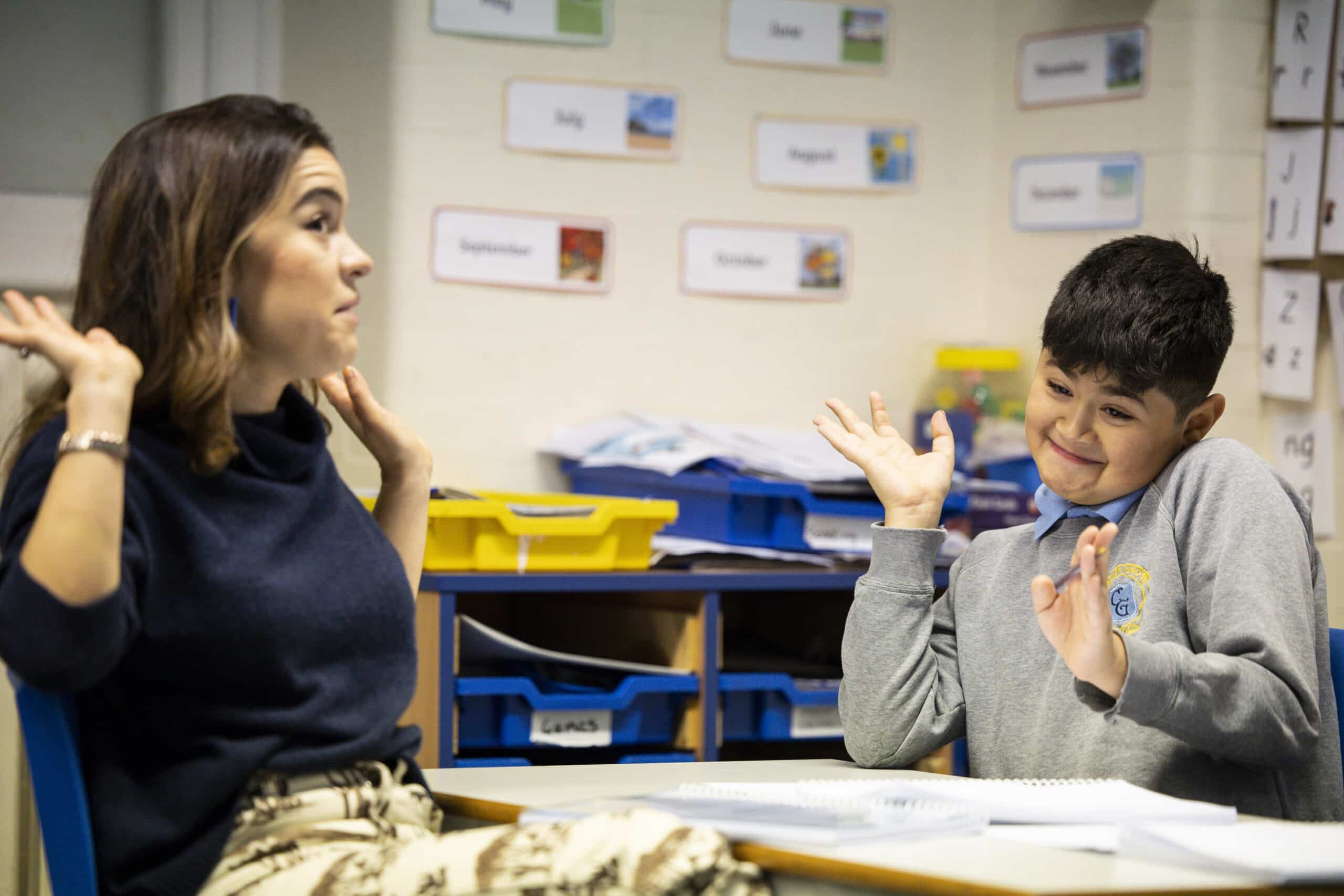
It may sound simple, but it’s essential to begin the session by greeting and welcoming pupils with a smile. Introduce yourself, then kindly ask your pupils to do the same.
There is space within the first session to get to know your group better. Warm-up activities (which your programme coordinator will give you) like ‘this or that’ help break the ice, and gives you a chance to learn a bit about their personalities and the group dynamic. You’ll probably find they want to learn more about you!

Familiarise yourself with the content before the session
Volunteers are provided with all the training materials and workbooks they need in order to provide personalised and targeted tuition to our pupils.
We advise you to familiarise yourself with the session plan before each tutoring session. This way, you’re better prepared to answer questions, use the techniques provided in our ‘tutor tips’ and manage the flow of the session.

Ask open-ended questions
Open-ended questions have the power to challenge pupils and motivate them to think critically. This way, they are not passively obtaining new knowledge, but process it in an effective way and provide a range of responses.
Remember to be attentive, show an authentic interest in what they say and reply with kindness.
Connection starts before you speak
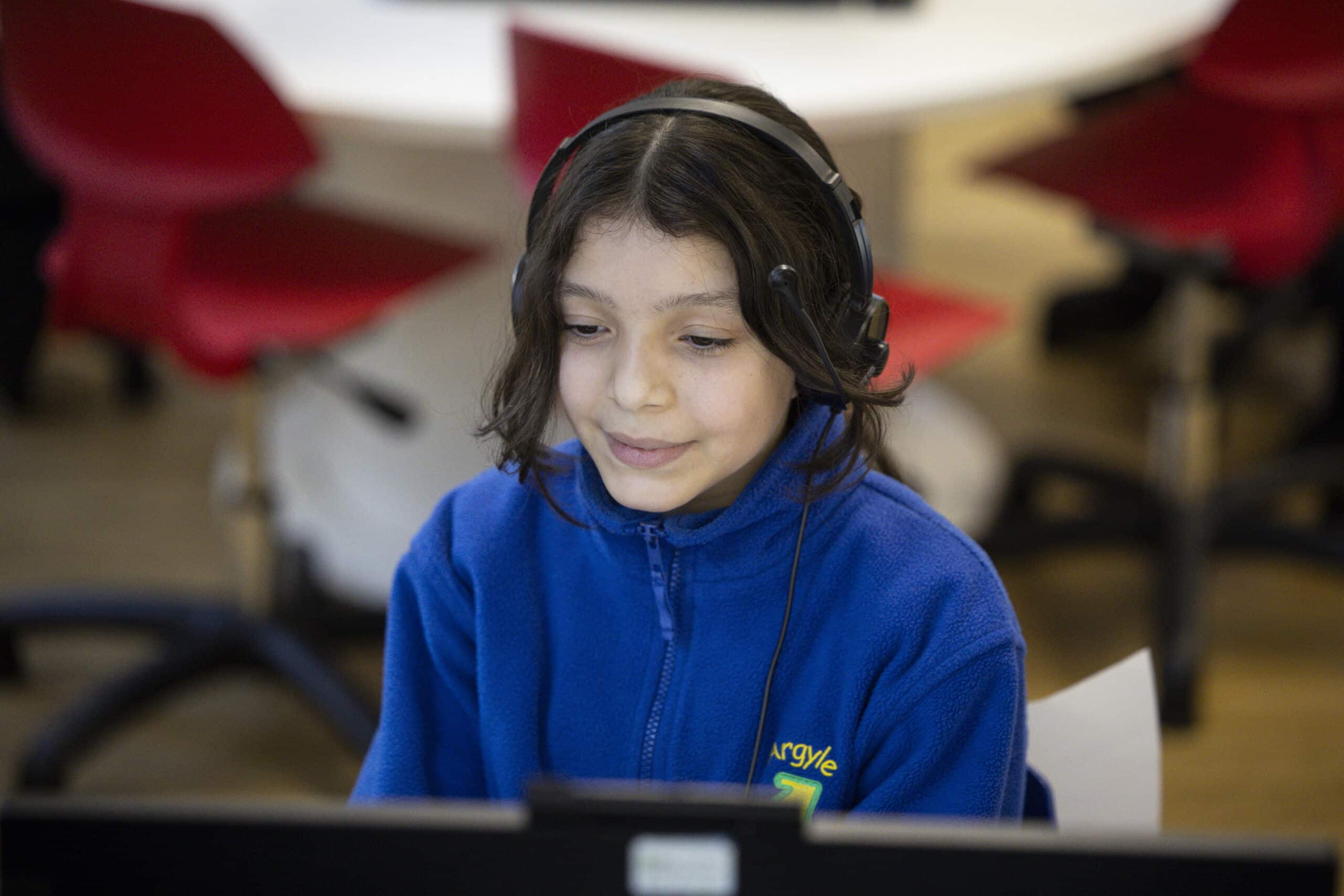
Your presence matters! Open body language, engaged posture, and a welcoming attitude are your most powerful tools. They instantly make you more approachable and build the trust needed for a strong connection with your pupils.

The power wrap-up
Use the last few minutes to solidify the day’s progress and use positive reinforcement.
Briefly review the concepts or problems covered, using the reflection activity in the workbook for guidance. This helps your pupils mentally cement what they learned.
Praise them specifically for their attendance, participation, and engagement. Focus on effort, not just correctness. Use concrete praise, like, “I really liked how you stuck with that challenging word problem.”
Extra tips for online tutors
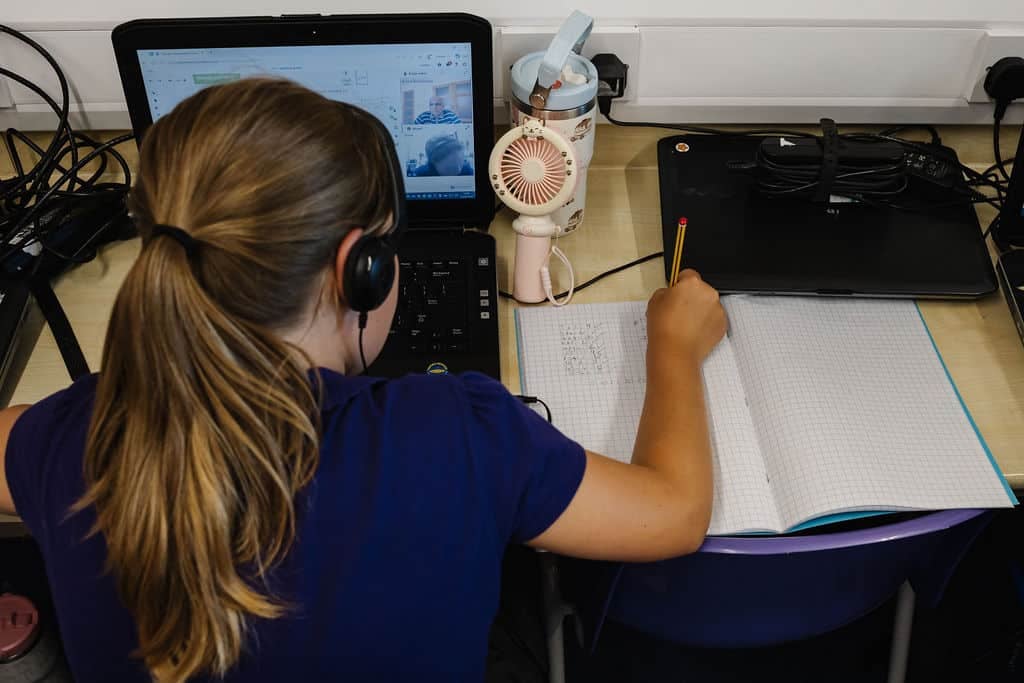
Before your first online session, you’ll receive online-specific training. This quick, practical session will confidently guide you through all the Virtual Classroom’s tools and functions.
We advise that our online tutors run a browser test before the first session begins, so you can check that your network connection, webcam and microphone are working.
‘Since starting my volunteering, I have learnt that you are never too old to learn new skills. I now have greater confidence with technology and a greater understanding of how to communicate with children and young people in an academic environment.‘
Elaine, volunteer
We are always here to support you
All of our volunteers will an assigned programme coordinator for each volunteering programme they are a part of. They are on hand to make sure everything runs smoothly in our online and in-person programmes.
‘Having left school some time ago I certainly would not have been able to do this without some help! The workbooks provide clear, easy-to-follow plans for sessions, the training team provide extra training sessions if you feel they are required and the local co-ordinators are always in the room with you during your tutoring sessions to provide support as you need it.’
Tim, volunteer tutor
For those brand new to tutoring, this is an opportunity to challenge yourself and get out of your comfort zone! We’re here to support you every step of the way. Being nervous before your first tutoring experience is completely normal; don’t let it hold you back from a rewarding experience.
‘I would say to give it a try it as I found it worthwhile. The commitment only needs to be as little as one hour tutoring a week with roughly 15 minutes prep time. With regards to experience, if you use the support materials provided by Action Tutoring and have a genuine interest in your subject and helping young people then you should have all you need to get started.’
Tim
Read more
Why local authorities should partner with Action Tutoring
15 October 2026
Local authorities across the country share a vital priority: ensuring that a child’s socioeconomic background does not dictate their educational outcome. Yet, with post-pandemic learning gaps persisting and municipal budgets stretched thin, council education teams face a complex challenge.
How can local authorities deliver targeted, high-impact support to under-resourced pupils in a way that is both evidence-based and financially sustainable?
The answer lies in strategic, co-funded collaboration. In Dorset, a successful partnership between Dorset Council and Action Tutoring demonstrates how local authority co-funding can transform pupil outcomes, raise Key Stage 2 (KS2) attainment, and deliver exceptional value for public funds.
Strategic alignment
Dorset Council’s overarching education strategy explicitly prioritises reducing educational disadvantage and closing attainment gaps for pupils facing disadvantage by the end of primary school. Recognising that small-group tutoring is one of the most effective, research-backed interventions available, the council sought an established delivery partner with a strong track record.
Action Tutoring stood out as having a great reputation for working with pupils from low-income backgrounds.
Sharon Peel, Education Challenge Lead at Dorset Council
Dorset Council initially co-funded a pilot across one middle and one secondary school. Following overwhelmingly positive feedback from headteachers and measurable progress among participating pupils, the council expanded its investment to co-fund programmes across seven high-disadvantage primary and middle schools in the region.
Maximising public funds through volunteer power
For council leaders accountable for public spending, cost-effectiveness is non-negotiable. Action Tutoring offers a unique financial model: by mobilising high-quality volunteer tutors and supplementing delivery through its own charity fundraising, Action Tutoring significantly lowers the cost per pupil for local authorities.
As Sharon Peel highlights, this model ensures children receive support from tutors passionate about educational equity while delivering “a quality service in the most cost-effective way.” Local authority funding is thus leveraged, stretching public investment further to reach more pupils who need it most.
Real impact
While quantitative data and termly progress tracking give councils confidence, the true test of any intervention is seen in the classroom. In Dorset, school leaders report marked increases in pupil motivation, classroom engagement, and emotional wellbeing.
The data below underscores some of the standout SATs outcomes achieved by pupils facing disadvantage across partner schools in the region:
Conifers Primary School
- Maths: Out of the 10 pupils tutored, 80% met expected SATs standards.
- English: Out of the 11 pupils tutored, 70% met expected SATs standards.
Holy Trinity Church of England VC Primary School & Community
- English: Out of the 20 pupils tutored, 70% met expected SATs standards.
The human stories behind the data illustrate this transformation:
- Building growth mindsets: Before tutoring, Year 6 pupil Joshua struggled with multi-step reasoning and fractions. Working step-by-step with his volunteer tutor built his confidence to the point where he now asks for harder questions, calling tutoring “the best bit of Year 6.”
- Unlocking subject mastery: Arianna, who previously felt nervous about maths and struggled with division and fractions, now finds fraction arithmetic “easy” after receiving targeted, patient support from her tutor.
- Measurable attainment gains: Kobie, a Year 6 pupil facing working memory challenges, gained 10 marks on his mock assessments and achieved a Greater Depth score in reading. Beyond academics, Kobie valued the genuine human connection with his tutor.
Partnering for future opportunity
When local authorities co-fund Action Tutoring, they are not simply purchasing an intervention – they are investing in a proven solution to close the attainment gap and drive social mobility. The combination of structured curriculum resources, dedicated Programme Coordinators handling school logistics, and trained volunteer tutors creates a seamless, low-friction partner for councils and schools alike.
By collaborating with Action Tutoring, local authorities can bridge the literacy and numeracy gap, boost Key Stage attainment, and provide young people facing disadvantage with the confidence and qualifications needed to thrive.
As put by Julie McCulloch, Chief Executive of the Education Policy Institute:
“Burnham’s cabinet has inherited an ambitious commitment. This year’s ‘every child achieving and thriving’ white paper set the target of halving the attainment gap between disadvantaged children and their peers by the time the current generation leaves secondary school.”
Let’s play our part at the local level so that nationally, education becomes fairer.
Get in touch
Delivering directly to schools, we provide heavily subsidised, evidence-based small-group tutoring in English and maths specifically for disadvantaged pupils. If you’d like to find out more, or speak to us about a partnership opportunity, you can contact Alice Nelson, Director of Programmes, directly on a.nelson@actiontutoring.org.uk
Related content
How to make your donation go further with Gift Aid
1 October 2026
In 2024-25, Gift Aid to UK charities was worth £1.88 billion. It’s a huge amount. BUT it could – and should – be even more! Every year, charities miss out on £560 million in unclaimed Gift Aid tax relief.
Gift Aid is one of the simplest and most effective ways to give to charity. It comes at no extra cost or effort to the donor.
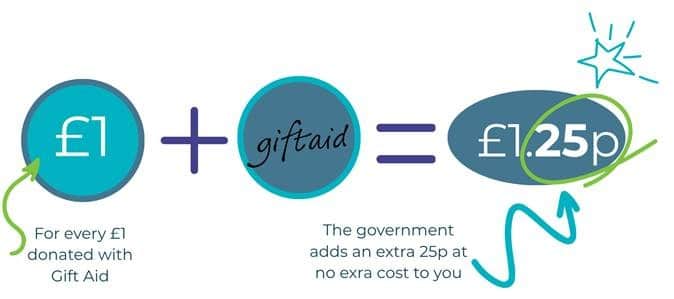
If you are a UK tax payer, you can make every £1 you give worth 25p more, under the Gift Aid scheme, as it allows Action Tutoring to reclaim tax you have already paid to HM Revenue on eligible donations. This means that you can make an even bigger difference to young people facing disadvantage at no extra cost or effort to you.
Please refer to this link for more government guidance on Gift Aid eligibility and conditions.
Donating to Action Tutoring
It’s really easy to add Gift Aid to your Action Tutoring donation. Simply visit our Just Giving page. After you have entered your donation amount and confirmed that the donation is your own money, you will be asked to add Gift Aid and tick the box.
If you are donating via bank transfer, or have a direct debit with us and would like to add Gift Aid, it’s really simple. Just reach out to our Fundraising Coordinator, Sarah, on sarah.chandler@actiontutoring.org.uk, to ask for a Gift Aid Declaration form, which only takes a couple of minutes to fill out.
Higher rate taxpayers
With Gift Aid, basic-rate tax relief (20%) automatically boosts your donation, but higher-rate taxpayers (40% or 45%) can claim additional tax back through a Self-Assessment tax return or a tax code adjustment.
For example, a £10,000 donation becomes £12,500 to Action Tutoring with Gift Aid added. If you pay the 45% tax rate, you can personally reclaim the 25% difference between the basic rate and higher rate of tax, equalling £3,125. This effectively reduces your net cost to £6,875. Or you can choose to donate the tax relief to turn your generous £10,000 donation into a whopping £15,625!
Please note that Action Tutoring are not tax experts and cannot provide tax advice. Anyone considering claiming tax relief should check their tax position and consider seeking professional advice.
Ticking the Gift Aid box takes seconds, and sustains our life-changing tutoring that teachers say “transforms what our most disadvantaged pupils believe is possible”.

We want to say a huge thank you to all our generous donors who have already ticked the box, making their donation go further and supporting more pupils to unlock their potential.
Thank you for your donations and support!