
Responding to the Alan Milburn review: why early academic support matters
18 November 2026
We welcome the findings and proposed solutions in Alan Milburn’s final report into the NEET crisis and his call for a “complete system reset” to achieve “NEET Zero” and we urge policymakers to ensure that this starts early with prevention beginning in the classroom well before a young person hits 16.
As an education charity providing dedicated tutoring to pupils facing disadvantage, we know first-hand that academic intervention is the most effective form of NEET prevention. Helping pupils secure gateway qualifications drastically improves their life chances. Currently, around half (48.4%) of 18 to 24-year-olds with no qualifications end up NEET. As the review itself acknowledges, preventing young people from falling out of the system requires identifying those at risk of disengagement while they are still in school.
The proposed Youth Opportunity Service and new employer incentives will create vital new pathways. But these post-18 opportunities will only be accessible to young people facing disadvantage if we equip them with the foundational academic grades required to walk through those doors. When pupils fall behind in core subjects like English and maths at primary and secondary school, the consequences follow them into adulthood. Without passing grades at SATs and GCSEs, their options for further learning, training, and employment narrow dramatically.

Every week, our volunteer tutors work in partnership with primary and secondary schools to give pupils facing disadvantage the targeted English and maths tuition they need.
If the Government is serious about shifting from a welfare state to a working state, its upcoming reforms must pair post-18 guarantees with sustained, early academic support in schools. By investing in this and ensuring young people do not slip behind, we can boost social mobility, equip the next generation with the grades they need to thrive, and break this cycle.
“Alan Milburn’s review sets out important recommendations to create clearer pathways into work and training, but post-18 opportunities will only be accessible to disadvantaged young people if they leave school with the foundational grades required to take them up.
Disengagement rarely begins at 18. We tutor young people facing disadvantage ahead of their SATs and GCSEs every day and we see how critical those gateway qualifications are. Passing grades in GCSE English and maths act as a passport to A Levels, apprenticeships, and entry-level employment.”
Sarah Pearson, Interim CEO, Action Tutoring
Spotlight on success: Our partner schools closing the attainment gap
5 November 2026
Across the country, our partner schools are navigating some of the toughest pressures in education, from tightening budgets and persistent absence to evolving inspection frameworks. Yet, by embedding targeted tutoring into their wider school strategy, school leaders and teachers are turning these challenges into a blueprint for sustained pupil success.
We’re shining the spotlight on and celebrating fellow partner schools that have overcome common barriers to drive measurable impact during the 2025–26 academic year.

1. Turning targeted intervention into Ofsted-ready evidence
The challenge: Demonstrating clear, measurable progress for Pupil Premium learners under scrutiny, without adding to teacher workload.
The blueprint: Using baseline data to align small-group tuition with classroom priorities, targeting specific skill gaps to deliver progress gains, while creating inspection-ready evidence.
At Badocks Wood E-ACT Academy in Bristol, Year 6 Class Teacher, Maths and Oracy Lead Ella James used regular sessions to drive measurable academic recovery ahead of SATs:
“Our children that attend action tutoring regularly have seen significant improvements in their knowledge and understanding. In terms of data, we have multiple students that have improved their mock scaled score by 10 in maths over the few months that the tutors have been working with them.”
At St Ursula’s Convent School, Key Stage 4 Director Steve Muzio took this a step further by embedding Action Tutoring as a core mechanism for Key Stage 4 Pupil Premium achievement. During their November 2025 inspection, Ofsted visited an Action Tutoring session to observe one of the elements contributing to the school’s overall strategy for disadvantaged pupils.
“I was able to explain how the Action Tutoring baseline assessment helps us identify and target specific skill gaps. This was a key lever in us securing a ‘Strong Standard’ for Achievement.“
2. Tackling persistent absence by building classroom confidence
The challenge: Breaking the cycle of low confidence and disengaged attendance among pupils who have fallen behind.
The blueprint: Creating a low-stakes, high-trust environment where pupils feel seen, supported, and motivated to show up, and can ask questions without the fear of getting it wrong.
At St Paul’s Way Trust School, Head of School Karyce Maitland saw this shift in mindset first hand among Year 5 pupils:
“Sitting with the Year 5 colleagues and teachers, it was really clear to see the pupils’ progress since the start of the year, as well as improvements in their confidence. The teachers really spoke about how the children receiving tutoring are really flourishing and confident with their learning. These are children who may not have felt so confident at the beginning of the year.”
For many schools, that newfound confidence is becoming a powerful hook for improving attendance. Ella James noted how tutoring sessions at Badocks Wood E-ACT Academy have shifted pupil habits:
“We have children that struggle with their attendance but they are dedicated to arriving on time to ensure that they don’t miss their session. This is having a wider impact as we have seen their attendance steadily increase throughout the year, meaning that they are engaging in more learning.”
3. Maximising Pupil Premium value to level the playing field
The challenge: Delivering high-impact, equitable support when school budgets are stretched and families cannot afford private tuition.
The blueprint: Leveraging volunteer-led tutoring to provide a structured, quiet space and dedicated support that replicates private support.
As Gillian Kemp, Director of Education and Trust co-CEO at University Schools Trust, explained:
“We know for our children coming from more advantageous backgrounds, their parents will be doing this. We want to emulate that and give it to those children who don’t necessarily have those means to be able to afford it, or even the time or the location in their homes to be able to sit and revise. What you are doing with the group of volunteers will be instrumental in making a huge difference to the lives of our young people.”
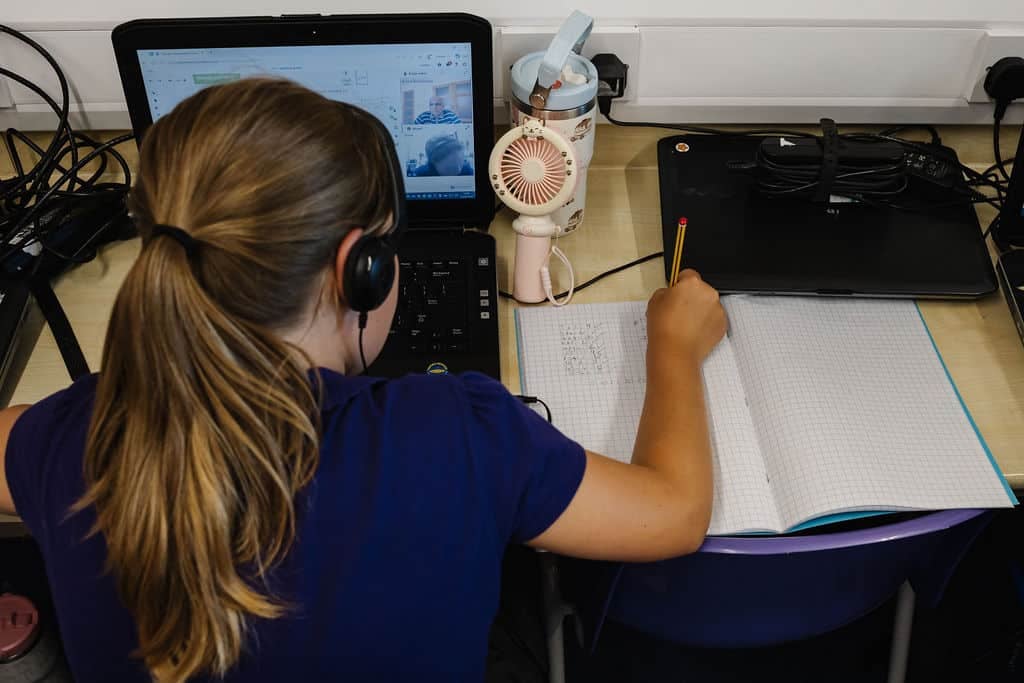
4. Scaling individualised support with minimal administrative burden
The challenge: Delivering consistent, small-group intervention when teachers and senior leaders are already stretched to capacity.
The blueprint: Leaning on an dedicated Action Tutoring Programme Coordinator to manage session logistics, tutor support, and day-to-day running, freeing up staff time while multiplying classroom capacity.
At St Ursula’s Convent School, Steve Muzio emphasised the operational ease of this model:
“From a workload perspective, it is incredibly helpful that I can arrive first thing, ensure the session is running, and then leave it in the PC’s hands after 15 minutes. Knowing there is a trusted adult in the room and that things will run smoothly allows me to get on with my day.”
Ella James echoed this experience:
“It does not affect teacher workload as the tutors are very self sufficient and do not require any intervention in terms of behaviour. Chloe, who runs the session, ensures that all tutors and pupils are on task, engaged and supported which really helps the session to move smoothly.”
Get in touch!
Action Tutoring offers a proven, sustainable, and cost-effective way to stretch your Pupil Premium budget and transform outcomes for your most vulnerable learners. To explore a 2026-27 partnership, find out more or get in touch below.