
From placement to professional – Elsie’s story
This Student Volunteering Week, we are celebrating the incredible impact our student volunteers have – not only on the lives of the pupils they support but also on their own future career paths.
For many, volunteering is a way to give back to the community while studying. For others, it becomes the first step toward a fulfilling career in the charity sector. Elsie, our Programme Coordinator in Manchester, is a brilliant example of the latter.
Having started her journey with Action Tutoring as a placement student during her time at university, Elsie was able to bridge the gap between “student life” and “professional life” by building the very skills – confidence, adaptability, and proactivity – that we look for in our staff today.
We sat down with Elsie to discuss her transition from the virtual classroom to the Manchester programme team, and why having the perspective of a volunteer is her greatest “head start” in her professional role.
When you first began your student placement with Action Tutoring, what were you hoping to gain? Did you have an idea of what kind of careers you wanted to explore on leaving university?
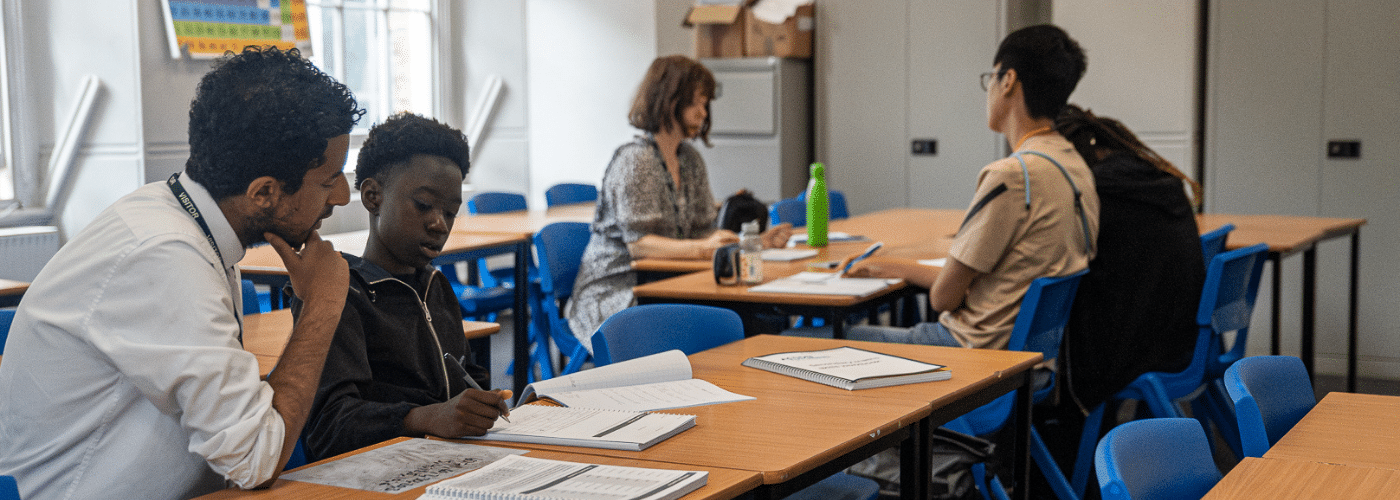
I was a university student keen to see if working in education would be a good career fit for me after graduating. I came into tutoring hoping to gain confidence in my communication skills when working with younger age groups.
As the Action Tutoring programmes run in small group settings, this was the perfect way to learn skills for classroom control and gain experience in what techniques work to maintain a pupil’s engagement, without having a whole class to control.
Looking back, which specific skills did you develop during your placement that you find yourself using most frequently now in your current staff role?
Confidence springs to mind first. A lot of the tutoring I did was online via a virtual classroom and I remember being nervous for my first session as to whether I would feel confident enough through a virtual setting to conduct a beneficial session for my pupils.
As each session progressed, I realised that my delivery of each session became increasingly confident as I built rapport with the pupils and learnt which styles of learning suited them best.
My growth in confidence had led me to enjoy and look forward to communicating with teachers, tutors and pupils in my role as a Programme Coordinator, which is something I would have previously felt apprehensive about before tutoring.
Communication is another skill which I built upon whilst tutoring. I learnt that not every pupil will understand explanations in the same way. For example, when describing what a word means, there are multiple ways to define the word, each of which may resonate more with one pupil than another. This led me to become more creative in the ways I explained concepts or methods.
This adaptability in communication is something I use within my job as a Programme Coordinator; for example when offering guidance to tutors on how best to manage different abilities within their groups, or with link teachers when discussing different ideas to maintain high attendance for each session.
How did having an understanding of our mission and operations as a volunteer give you a ‘head start’, or a unique perspective, during the application and interview process for your permanent position?
Having volunteered as a tutor before working for the charity, I already had a great understanding of Action Tutoring’s mission to close the attainment gap for disadvantaged pupils across the country. Tutors get to see first hand this mission in practice, and witness the successes of the programmes through watching their pupils progress.
This, paired with how supported I’d felt as a tutor by the Programme Coordinators who oversaw my programmes, was what made me curious as to whether this career path would be something I’d really enjoy.
Having had the perspective of being a volunteer tutor, when it came to applying for the role and interviewing I had a good understanding of the ethos of the organisation, which gave me confidence that I would be a good fit.
I also understood the processes involved in becoming a tutor and some of the challenges that tutors face, allowing me to demonstrate how I would handle certain scenarios as a Programme Coordinator.

For students currently on a placement who are hoping to secure employment afterward, what are the top three things they should focus on to stand out and prove their value to an organisation?
- Building confidence in yourself and knowing that your skills and expertise will provide value to a team is important, and will demonstrate your readiness to transition from a student to a colleague. Confidence in your understanding of the values of an organisation and how these align with your own is also important as it allows you to express authentically why you are a good fit for the role.
- Proactivity – showing that you can anticipate and act in advance of challenges by creating solutions and confidently managing your own workload demonstrates that you are a valuable team member. It shows the employer that you are someone who has a resourceful working style, and that you are invested in the success of the organisation.
- Strong communication is a key skill that all employers look for. From the very beginning of the application process, written communication skills are key, as an employer is looking to read a clearly structured and concise cover letter that demonstrates the particular strengths that make the candidate suited for the role. Confident verbal communication is important in an interview setting. A strong communicator who can balance sharing ideas with active listening will be a valuable asset to any team.