
Overcoming my initial anxiety as an online tutor
21 April 2023
Teaching for the first time can be challenging. It is not as easy to adapt to and meet the needs of different pupils, who depend on you to instruct them.
When I first entered the education sector, I started out as a Teaching Assistant (TA) and for the most part, I didn’t have to actually lead lessons. I enjoyed supporting and working with pupils on a one-to-one basis, analysing where they needed help and targeting those gaps.
So when the option to volunteer with Action Tutoring as an English tutor as part of my university degree programme sprang up, I jumped at the opportunity. Tutoring children was something I had never actually done before, but I had experience working in close-knit groups as a TA. I wasn’t nervous in the slightest.
Conquering the doubts
The option for face-to-face tutoring in a community school was unavailable in my location and the only option was to tutor online. Apprehensive at first, I cautiously took on the volunteer role as an online tutor.
A number of questions were spinning in my head: how do I get familiar with virtual learning software? How do I control pupil behaviour if it’s online?
It was only after my first tutor induction session that I began to feel more at ease, as I was able to ask all of these questions and get answers. Action Tutoring provided me with further help with using the online software I’d come to fear – Vedamo.
Sense of relief
Never having used any online classroom software, or anything close to it before, the basic training on Looop really helped. It was simple and straightforward – the instructional videos were segmented into small 2-5 minute clips and it wasn’t overwhelming for a first-time tutor like myself.
After the training, I was given my login credentials for Vedamo and informed I could log in and practise any time I wanted. This was a relief, and I felt my anxiety slip away. Having access to Vedamo at any time allowed me to practise, and become comfortable and familiar with the different features of the learning platform.
After speaking to my assigned programme coordinator, I was sent an Action Tutoring workbook via post a few weeks before my tutoring sessions began. The workbook covered all the lessons and included answers to all the learning activities that I would be doing with my pupils.
Even more helpful, Action Tutoring also provided me with the online lesson templates, specifically made for Vedamo. All I had to do was simply upload the template on Vedamo and the lesson was live for pupils and myself to work with.

First online session
My first tutoring session was smooth. I uploaded the lesson template on Vedamo immediately and the physical workbook helped me with tips and tricks throughout the lesson.
Meeting pupils online was a new experience but felt exactly like I was in an actual classroom. The connection between myself and the pupils was not lost over online delivery and I could focus all my attention directly on interacting with my pupils on the screen.
Overseeing delivery
Another great relief for me was the fact that Action Tutoring has a programme coordinator in the classroom with the pupils during the session. This meant that if I had any concerns about pupil behaviour or technical issues at all, they could be resolved quickly.
Everything I had originally worried about with regard to tutoring online has just withered away in this first lesson. The sessions after that only seemed to get better.
After approval from my programme coordinator, I had total freedom to adjust the tutoring approach slightly to tailor the gaps of the pupils, which gave me some independence over the lesson delivery.
Consider volunteer tutoring
If you are feeling nervous or apprehensive about tutoring online, then I totally understand you. But, if you are anything like me, then Action Tutoring is the education charity to work with. They will understand and hear your concerns and approach your problems with care, consideration and training.
The anxiety over online tutoring shouldn’t be a reason preventing you from trying it. Action Tutoring will help assuage all your fears and doubts.
Remember, one of the most important things about online tutoring: no commute! Give it a try and see how it goes.
Author: Penelope Rudock
DfE updates NTP figures on Pupil Premium, courses and school participation
20 April 2023
With the National Tutoring Programme (NTP) in its third year, the Department for Education has today updated its statistics on the number of courses, school participation, and pupil characteristics.
The NTP was introduced in July 2020 as a four-year education recovery scheme to support children whose learning were most affected by the Covid-19 pandemic disruption.
As an accredited Tuition Partner that existed long before the NTP and advocated for its introduction, we keenly follow the evidence and impact of the scheme to ensure it’s on track to help students, especially disadvantaged, to recover from learning loss, with the hopes of narrowing the attainment gap.
Here are four quick takeaways from today’s updated statistics:
· Pupil Premium target
Half of pupils receiving tutoring support under the scheme are in receipt of Pupil Premium (PP) – an annual grant given to schools to improve the attainment of children from low-income households or eligible for Free School Meals (FSM).
According to DfE, “49.8% were known to be eligible for free school meals (FSM) within the last 6 years.”
Although it’s encouraging that 1 in 2 pupils benefitting are from lower income households, the percentage is below the original 65% PP target the scheme was aiming when it was first established.
We are proud that 70% of the pupils we support at Action Tutoring are in receipt of Pupil Premium. Tutoring should be overwhelmingly focused on pupils from low-income backgrounds.
We would advocate for the NTP to remain focused on disadvantaged children by ensuring at least two-thirds of NTP recipients are from disadvantaged backgrounds to help narrow the attainment gap.
· Schools Participation in NTP
As of mid-January 2023, DfE estimates “that 65.7% of state schools have participated in the NTP in the 2022-23 academic year.” This represents an increase of over 5 percentage points as compared to the figure as of March 2022, which was 59.9%.
About three-quarters of schools have indicated that they intend to deliver tutoring this year.
· Special Education Needs or Disability (SEND)
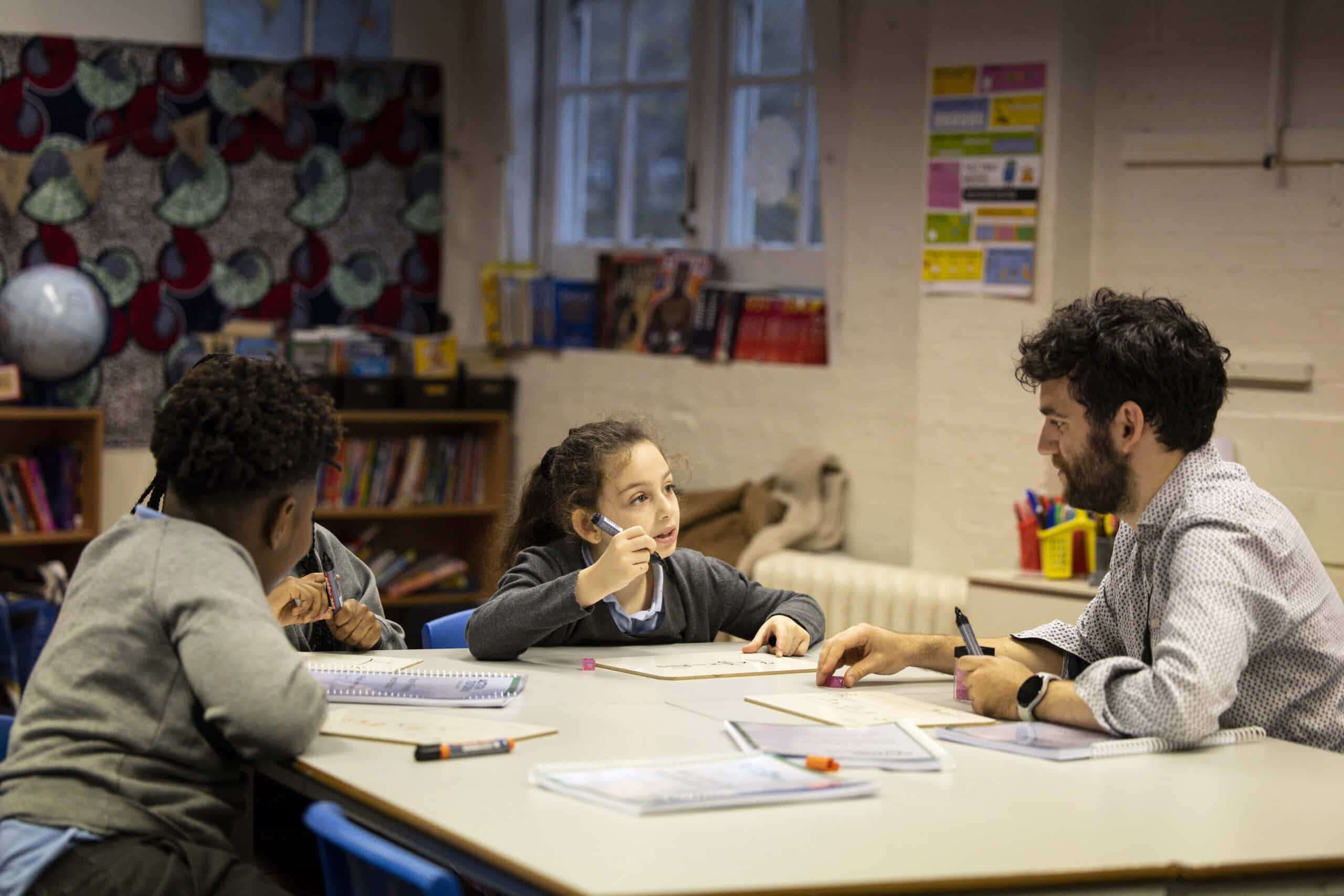
The new figures paint a picture of SEND pupils who are receiving tutoring in schools. The data shows 28.3% were known to have special educational needs.
It is encouraging to know the NTP is reaching pupils with special education needs.
· NTP courses started
The new data estimates that at least 839,495 starts had been made by pupils on tuition courses through the NTP in the 2022-23 academic year alone, resulting in total course starts of at least 3,365,598 as of January this year.
The new total figure is just over half of the original 6 million course starts target of the NTP when it was rolled out in July 2020. Given the NTP is in its third year, it would have been more encouraging if two-thirds of the target figure were reached, however we acknowledge the continuous efforts of the DfE to advance the figures on courses.
More NTP data needed
The NTP data released today is limited as compared to previous statistics. It focuses on restricted data from schools, without indidicating in detail the different tuition routes.
Today’s data did not capture geographical breakdown of tutoring uptake, which indicates whether the scheme is reaching pupils in cold spots or hard-to-reach areas.
We look forward to more extensive data with estimates broken down by region and the different NTP routes – school-led tutoring, tuition partners, and academic mentors – for greater understanding of the scope and impact of the programme.
Ramadan and working in charity: Strong focus on helping others
13 April 2023
The author is a Birmingham programme coordinator for Action Tutoring. The programme coordinator is present in partner schools to oversee the delivery of tutoring.
Ramadan is the ninth month of the Muslim year, during which fasting is observed from dawn to sunset.
One of my favourite memories of Ramadan is in the summer of 2015. The weather was extremely hot and I had to sit so many mock exams. Fasting was particularly hard during that period. Nonetheless, it felt more rewarding when Eid al-Fitr arrived – the festival of celebration which marks the end of the month-long fasting. I recall visiting numerous family members to eat the most delicious foods and spending time with people in our local community in the beautiful weather. These are highly nostalgic memories.
To me, Ramadan is the time for true self-reflection, generosity, and gratitude. Observing this sacred time allows me to refocus on areas of my life that are of priority such as family, friends, and work.
Connecting with Muslim colleagues
My observation of Ramadan positively impacts my work with volunteers and pupils, as charity is such an important part of Islam, but even more so, Ramadan. As a programme coordinator for Action Tutoring in my city, I work with a primary school where a lot of Muslim students are fasting as well – many for the first time.
Directly understanding the experience and the struggles Muslim pupils may be facing as they receive tutoring support at this time – such as fatigue, reduced concentration, and hunger – has helped me connect a lot more with them. The same experience applies to some of the Muslim tutors I’m overseeing. There’s a collective sense of solidarity and feeling that we are all in this together.
Parallels between Ramadan and charity work
There are definitely parallels in moral values between supporting young people facing disadvantage and the tenets of Ramadan. Charity is one of the five fundamental pillars of Islam and is considered one of the best deeds any human can perform. There is a particularly heightened focus on charity within Islam towards the most vulnerable sectors of society, such as children, orphans and people experiencing hardship.
This perfectly aligns with the work that Action Tutoring does across the country to reduce the educational attainment gap for young people. During Ramadan, charitable acts are encouraged even more as it displays empathy and helps people to make a positive difference in their surroundings. By positively impacting the educational outcomes and welfare of young people, society can improve as a whole.
Thus, supporting charities during Ramadan is extremely important, as the Prophet Muhammad said: ‘The best act of charity is carried out in the month of Ramadan’.

How to support Muslim colleagues at work
People can support their Muslim colleagues who are fasting during Ramadan in a plethora of ways:
- Be aware your Muslim colleagues may be tired and have less energy during the workday. Show some level of empathy when making plans that include them. Having frequent rest breaks and more inclusive meeting hours, preferably earlier in the day, is a helpful solution.
- Raising awareness within the workplace about what Ramadan is and its importance is a great way to build an inclusive workplace and build positive team connections. For example, this can be done by inviting Muslim colleagues to share their experiences and educate others about their faith.
- Being respectful of their sacred tradition and choices is a good way to support Muslim colleagues during Ramadan. Some Muslims are exempt from fasting if they are pregnant, ill, menstruating or breastfeeding. It is important to never make assumptions and ask intrusive questions if you notice that your Muslim colleague is not fasting at any point.
Making a difference through Ramadan
As Muslims, we are charged to give back to our communities during Ramadan and beyond, I would appeal to other Muslims to find diverse ways of making an impact in the lives of people from disadvantaged backgrounds.
Working with Action Tutoring helps me to fulfil my charity virtue as a Muslim and with the support of many more, we can change the lives of young children positively. By volunteering for an hour a week or donating to the cause of the charity, you can uplift the lives of pupils from low-income families and give them a better chance at life.
Investing in tomorrow’s workforce today: How tutoring can help solve the skilled labour shortage
4 April 2023
The labour market in the UK is at a crossroads. Businesses and the public sector are still grappling with a chronic worker shortage, making it harder to recruit enough skilled workers to fill open roles.
According to the Open University’s 2022 Business Barometer, more than two-thirds (68%) of the UK’s small-medium businesses are currently facing skills shortages. This figure rises to 86% of large organisations and the knock-on effect is reduced output, profitability or growth.
The challenge persists as the economy faces the triple threat of rising inflation, sluggish growth, and post-pandemic disruption.
With the nation’s economists and labour experts working around the clock to find a way to tackle the lingering labour challenge, there is a medium to long-term solution that could prove beneficial to the economy beyond the stop-gap measures – supporting students at crucial points in their education.
What’s the cost of inaction?
A Learning and Working Institute report found that the skills shortage is expected to cost the country £120 billion by 2030. It also predicts a shortfall of 2.5 million highly skilled workers in seven years.
The big question remains: why aren’t we tapping into the unlocked potential of the next generation and how can we achieve this?
The young people in schools today are the future workforce so it should be in the interest of the business community to want to support young people in any way to excel. One practical thing is for people in business to volunteer as tutors to ensure the workforce of tomorrow gets the maths and English qualifications needed to move into further education or employment.
Susannah Hardyman, founder and CEO of Action Tutoring, in a recent Facebook Live interview.
Each year tens of thousands of young people slip through the net and end up as not in education, employment, and training (NEET) simply because they couldn’t get a pass grade in their English or maths GCSE. New figures from the Office of National Statistics estimate that over 788,000 people across the UK are NEETs and each individual is estimated to cost the economy £120,000 over the course of their lifetime.
Education in this country is unfair
Most NEETs are far more likely to be from disadvantaged backgrounds and lacked access to the tools and resources to support their learning and pass their final examinations. The opportunities for disadvantaged young people will continue to be hampered without equal access to the quality and holistic education many of their better-off peers benefit from.
A proven solution for moving young people from at risk of failing their exams to passing is consistent, tailored, and quality tutoring to augment learning in the classroom. According to Action Tutoring’s analysis, 72% of disadvantaged pupils passed their maths GCSE after attending at least 10 tutoring sessions, despite two years of pandemic disruption and being at risk of failing to pass. This is a clear example of what is possible if tutoring is entrenched as a permanent fixture for all disadvantaged young people in schools.
Over 70% of NEET individuals can be supported to progress into employment, training, or education to fill the existing gaps in the labour market. If we fail to catch ‘at risk’ pupils soon enough, we are losing a prized opportunity to tackle the labour shortage hurting our economy, according to the Bank of England.
The role of business in addressing labour shortage
Businesses are directly affected by the skilled talent deficit as the problem doesn’t only impact staffing strength but also the supply chain network, overall productivity and customer experience. Long delays in delivery time and underwhelming output are likely to affect multiple sectors until more workers are hired to fill the gaps.
A number of proposals have been floated by economic researchers and business owners including upskilling or reskilling prospective workers, expanding temporary work visas, increasing wages and Jeremy Hunt’s continuing appeal for retired and post-work citizens to rejoin the labour force.
To stay proactive and ahead of the curve, the onus is on businesses to adapt to the changing dynamics of the labour market and employ novel strategies to help address the problem.
The shift towards hiring more younger talents straight out of high school is already happening. The Financial Times reported that as the skills shortage bites, UK employers are looking to diversify their hiring stream. About 23 per cent of companies surveyed by the Institute of Student Employers plan to “rebalance” hiring from university graduates to young people with only high school level education.
It’s in the best interest of businesses and industry to support the hundreds of thousands of young people who fail to meet national standards in English and maths, often set as a minimum requirement for job applications. This can be achieved by embedding volunteer tutoring of primary and secondary pupils into their corporate strategy to help nurture talent.

Leading by example
One business that has successfully embedded volunteer tutoring of young people into its community engagement strategy is Arup, a global sustainable development consultancy. By tutoring young children for an hour each week, their employees are not only imparting knowledge but also using the opportunity to encourage more young people to consider pursuing careers in Science, Technology, Engineering, and Mathematics (STEM).
The business is using its public-facing interaction with young people to identify, nurture and support budding talents who have an interest in engineering, design, and architecture. In turn, it’s helping to jumpstart the careers of young people to potentially benefit the company, the sector and the wider economy in the medium to long term.
Rethink talent strategy
We believe every business should rethink its talent acquisition strategy and play its part in laying the foundations for its future employees. It’s time for brands to become more involved in cultivating talent at the grassroots stage.
Key to the door or having the door slammed in your face?
For young people in school, passing GCSEs is more than just an exam pass, it’s the first rung on the career ladder and the key to the door of opportunity. If businesses invest in young people at school, through volunteer tutoring and mentoring, together we can prevent their transition into economic inactivity.
The link between school and business can be valuable if more people in business go into schools, not only volunteer but also share career experiences with young people. The support is about increasing pupils’ life chances so they can progress into further study and any employment routes of their choice so they are not held back by the barrier of not having the English and maths qualifications employers are looking for. The knock-on effect is that they will contribute to having a ready workforce for the future.
Susannah Hardyman
Can we really afford to lose a quarter of our future workforce because we didn’t invest the time when it was needed the most?
Partner with Action Tutoring as a business to support more pupils from low-income backgrounds to access additional academic support to progress in further education and employment.
Chancerygate takes on Yorkshire Three Peaks Challenge to raise £30k for Action Tutoring
27 March 2023
When Chancerygate was brainstorming on activities to help raise funds for Action Tutoring, finding a pursuit that played to the strength of the workforce was fundamental.
Making the final choice between a charity ball or a fitness adventure was hard, but Amanda believes the ultimate decision to negotiate the Yorkshire Three Peaks Challenge was the right one as half the workforce expressed interest after the announcement.
We have quite a strong and fit workforce. We thought an adventure would be better and will help with team-building. Plus with changing Covid-19 guidelines, having a huge gathering came with a risk. We went with the challenge
Amanda Walker, head of corporate social responsibility at Chancerygate – the UK’s largest multi-unit urban logistics developer and asset manager.
The Yorkshire Three Peaks challenge is a circular walk that encompasses three major hills – Pen-Y-Ghent, Whernside, and Ingleborough – in the Yorkshire Dales National Park. It is a 24-mile round trip route and includes 5,200ft of ascent.
A total of 24 daring employees took part in the conquest and 18 successfully completed the course in under 10 hours.
It can get quite emotional, the walk pushes your limits. The first peak went really well but it became more difficult towards the end. However, doing it as a team made it easier, and as a way to raise money for Action Tutoring to support more disadvantaged children was a motivating factor.
Ada Ioannidis-Mann, marketing manager of Chancerygate, who took part in the challenge
Chancerygate raised a total of £30,000 from its employees and network including business partners and suppliers, who donated towards supporting the cause. The donation could cater for a full academic year’s worth of tutoring for 77 pupils or purchase 5,000 workbooks that will benefit thousands of pupils.
Additionally, some Chancerygate employees volunteer weekly as subject tutors on Action Tutoring programmes in schools.

Susannah Hardyman, founder and CEO of Action Tutoring, said the donation will help expand tutoring access to more young people facing disadvantage.
The funds will enable us to support more children who are facing disadvantage with additional help to make meaningful academic progress. This will, in turn, help increase their life chances and open more doors to future opportunities in education and employment.
Susannah Hardyman
On what lessons she learned from the Yorkshire Three Peaks adventure, Ada said beyond investing in good hiking boots, staying positive and motivating each other is a sure way to conquer the hills. “Be positive and don’t leave anyone behind as you do it. Be a team player.”

Amanda urges businesses to support the inclusion of more people from diverse backgrounds by partnering with like-minded charities to benefit society as a whole.
Through volunteering and fundraising, every business can make a difference in young lives.
Donate or raise funds for our mission to give more disadvantaged pupils the additional academic support they need to get a pass grade to progress into further education or employment.
New research shows glaring inequalities in tutoring
9 March 2023
Since the Covid-19 pandemic disrupted education in March 2020, tutoring has expanded significantly to help address the lost learning time. With schools shut down for months throughout multiple waves of the pandemic, the National Tutoring Programme (NTP) was introduced as a way to augment learning and help pupils, mostly those facing disadvantage, to catch up.
A new report, Tutoring: the new landscape, published by the Sutton Trust today has thrown more light on how the Covid-19 pandemic has shifted the dynamics of tutoring and the persistent inequalities underlying its delivery and impact.
The report details the changes seen in both private and school-based tutoring, in the aftermath of the pandemic and examines tutoring impact, using the latest data from the Ipsos’ Young People Omnibus and recent COSMO studies.
Tutoring expansion
The data reveals that private tutoring is at its highest levels since 2005, with 30% of young people aged 11-16 receiving private tuition, up from 27% before the pandemic. Though many schools had been using the intervention prior to the introduction of the NTP, the government’s roll-out played a significant role in its growth. Before the pandemic, 10% of secondary school leaders reported tutoring was their priority for Pupil Premium spending but by 2022, this figure had more than tripled to 34%.
About 52% of young people agreed that their progress in school suffered as a result of COVID-19, with about 24% of young people reporting to have received tutoring from their school in the 2021/22 school year, up from 18% in the previous pre-pandemic year.
The significant expansion mirrors Action Tutoring’s delivery, which has more than tripled in reach today, compared to the 2019-20 academic year, in response to the rising demand for learning support during the pandemic.
Socioeconomic differences
The report also demonstrates how in-school tutoring, through the NTP, has helped to increase access to tutoring for pupils who typically would not be able to afford it.
According to the COSMO data, 32% of pupils from the most well-off households by income received private tutoring, compared to 13% for the worst-off. However, this trend is dramatically different when looking at the take-up of in-school tutoring through the NTP. About 32% of those in the worst-off households reported taking up extra tuition in school, compared to 22% in the most well-off.
Thanks to the expansion of in-school tutoring, the proportion of pupils accessing any form of tutoring is now almost level between the most and least deprived, with 39% of those from the most well-off households accessing tutoring, compared to 37% of those from the worst-off.
The report shows how the NTP is allowing a much wider group of pupils to access tutoring, and if issues with its targeting and delivery quality can be addressed, it holds the potential to level the playing field between the most and least disadvantaged in the long term.

Geographical disparities
The report also showed the stark regional difference in the use of private tuition, with 46% of pupils in London reported to have had private tutoring, compared to 21% in Wales and 16% in the North East. London at 27% is substantially ahead of other regions in tutoring rate, compared to under 12% in the North East.
This finding reflects the existing inequalities in the geographical distribution of private tutoring across the country, however, the introduction of the NTP tipped the scale in the favour of pupils who couldn’t afford it in these areas.
The data shows that regions with the lowest rates of private tutoring, such as the North East, East Midlands, and Yorkshire, have the highest rates of in-school tutoring take-up via the NTP.
Applying recommendations
As a Tuition Partner that existed long before the NTP and advocated for its introduction, we are in full agreement with the recommendations in the report including establishing the NTP for the longer term, stricter targets for disadvantaged young people, cancelling the subsidy reduction, improving quality of content and expanding to more remote areas.
The real long-term gain of the NTP is in closing the widening attainment gap and that can only be achieved if it is embedded permanently in our education system. Many disadvantaged pupils are in need of tutoring support, and making the NTP a permanent fixture will reap long-term benefits to the nation, rather than it being a stopgap measure in education recovery efforts.
Also, re-targeting the NTP more at disadvantaged pupils is the key way to tackle the attainment gap. Reinstating and enforcing Pupil Premium targets that were scrapped by the Department of Education and introducing incentives for uptake will help keep the focus on disadvantaged pupils and ensure accountability.
The report backs our call for the NTP’s regional expansion to more remote or ‘cold spots’, where tutoring is lacking. The capacity of Tuition Partners can be supported to expand our reach to underserved areas and deliver high-quality academic support nationally, especially in hard-to-reach areas.
The report’s recommendation for the planned subsidy reduction to be rescinded is consistent with our ongoing advocacy efforts for the funding to be maintained or increased, as schools continue to battle with budget squeezes. There’s a real risk that without additional funding, rates of uptake in schools will drop sharply upending the gains made to level the playing field.
Game-changer
There is no doubt that the NTP has widened access to disadvantaged pupils, who would otherwise not be in a position to afford it.
We are at a point in our education history where the NTP could significantly narrow the attainment gap between disadvantaged pupils and their better-off peers.
The recommendations in the Sutton Trust report, if applied to the NTP, will be game-changing to reversing inequalities in education across England, benefitting the life chances of thousands of pupils.
Changing the future of disadvantaged pupils in Chester & Westminster
3 March 2023
In a classroom at Blacon High School in Chester, Lillie listens attentively as her tutor reads the first practice activity in an English tutoring session. She asks questions for clarity on evaluating language and narrative throughout the session.
Lillie is one of forty pupils in Years 10 and 11 in Blacon High receiving weekly tutoring support from Action Tutoring. Although her favourite subject is Graphics Production, passing the English GCSE is essential to furthering her education. Lillie believes the personalised academic assistance is making a real difference for her.
With the extra help, I feel more confident with my answers in class and when doing my homework. The fact that the tutoring sessions are one-on-one or in small groups means I get to ask my tutor any questions I have, without feeling embarrassed about getting it wrong in front of a whole class.
Lillie
Improve young lives
With a new grant from the Westminster Foundation to support the work of Action Tutoring over the next five years in Chester and Westminster, the education charity will expand tutoring access to more pupils in need of additional academic support. The partnership includes a grant of £500,000 to fund tutoring provision targeted at disadvantaged pupils in nine schools in both cities to help improve their subject knowledge, confidence, and outcomes.
Providing maths and English tutoring to pupils at risk of leaving school without basic qualifications is a priority, particularly following the disruption in education amid the Covid-19 pandemic and the widening attainment gap. I am delighted that with our grant Action Tutoring can continue to deliver this important support in Westminster and Chester to help improve the futures of so many young people.
Kate Brown, Westminster Foundation & Philanthropy Director
Positive impact
Rachel Hudson has been the headteacher of Blacon High School for four years. After observing the consistent improvement in the performance of pupils receiving tutoring support, she said pupils have gone on to take more ownership of their learning, even beyond just the core subjects.
“The tutoring sessions have helped students to achieve or exceed their target grades in maths and English. The tutors have built strong relationships with our students, are flexible in their approach to tutoring, and have shown a genuine understanding of the challenges they face with learning. Tutoring has had a positive impact on their confidence and performance across the board, enabling them to go into successful courses and pathways.”
Rachel Hudson

Change the trajectory
Since its establishment in 2012, Action Tutoring has supported over 26,000 primary and secondary school pupils across England with the help of over 11,500 volunteer tutors. The charity is on track to support at least a further 6,000 pupils this academic year, through in-person and online tutoring delivery.
The attainment gap alarmingly stands at its widest level in a decade which means more young people are leaving school without reaching expected standards. The odds are even worse for children from disadvantaged backgrounds. With this grant, we can positively change the trajectory for thousands of pupils in Chester and Westminster by delivering tutoring support to unlock their potential and increase their life chances.
Susannah Hardyman, founder, and CEO of Action Tutoring
With disadvantaged people at risk of slipping through the net to become not in education, employment and training (NEET), the partnership will enable more disadvantaged pupils to receive the needed academic support to pass their SATs and GCSEs and to progress in further education, training, and employment.
Lillie’s dream career is to be an airline cabin crew member in the future and she thinks the consistent interactivity during her tutoring session is already steering her in the right direction by building her confidence level.
“My tutoring sessions have made me feel less anxious about talking to people I’ve never met before. This will definitely help when I have to speak to hundreds of new people every day.”
Lillie
Passing on my love for learning through volunteer tutoring
16 February 2023
As far back as I can remember, I’ve had a real thirst for learning. I have vivid memories of my dad obliging in taking me, a far-too-keen seven-year-old, to WHSmith on a Saturday morning to get my hands on those KS2 English and Maths work booklets – the type where you could treat yourself to a gold star upon getting an answer right. I loved my time in school and always tried to achieve my best in class, whether it was my favourite or least favourite subject.
For this love of learning, I’m both grateful and aware of my privileged position – as this is not always the case. Not all children are lucky enough to enjoy learning or to revel in the time that they spend in school, and there are many reasons for this. One of the biggest is that not all children begin at the same starting point in life as not all are able to easily access or utilise the tools that can support them through the education system.
Whilst I’ve never aspired to become a teacher or educator due to writing being my passion, in the six years since graduating from university with a Media and Communications degree and working as a copywriter and content specialist with charitable and educational organisations, I’ve seen from a distance the impact that the pandemic and budget cuts have had on pupils’ education.
In fact, the attainment gap between pupils facing disadvantage and their peers is currently at its widest for ten years, with just 43% of disadvantaged pupils meeting expected standards in reading, writing and maths at primary school.
It’s these stark statistics that encouraged me to do what I could to help give back and pass on my love for learning and language. After hearing about a friend’s experience volunteering with Action Tutoring, I applied to be trained as a volunteer tutoring English in late 2021.
By January 2022, I was supporting two Year 6 pupils to prepare for their SATs at a primary school in Newcastle and it quickly became the highlight of my week. Finding ways to engage the two boys in my group and demonstrate how important strong literacy and writing skills are, not just for school and exams, but to also get more enjoyment out of the content that they might play, read or listen to in day-to-day life was challenging at times – but it was a challenge I definitely relished.

Following their exams, I was delighted to learn in the summer that both pupils had gone on to surpass the marks they needed to ‘meet expectations’ – a real reward for both pupils, who I’d known had possessed the determination and ability to succeed. It’s also great that Action Tutoring shares with you this detail of how your pupils do in their SATs, as this gives you a real sense of fulfilment that you’ve helped to perhaps play a small role in this.
I then moved on and began tutoring two Year 5 pupils throughout the summer months, who I continue to tutor today – the girls are now just three months out from taking their Year 6 SATs. Again, it’s brilliant to see the progress that they’ve made in a relatively short space of time.
Perhaps my favourite thing about tutoring is that not only am I helping the pupils to learn, but they’re also helping me to develop professionally and personally.
They’ve helped me to strengthen my essential skills such as listening, facilitating discussion and giving constructive feedback. They’ve also filled me in on all of the curriculum changes since I was at school – what they’re currently learning or reading, and the reasons why they are important.
Last but certainly not least, they’ve also helped me to substantially improve my hangman skills – a game that is an ever-popular hit as a cool-down activity within our school’s sessions!
I’m grateful that Action Tutoring has provided me with this opportunity to pass on my own knowledge and love for learning to the next generation. After all, knowledge is power – but we must ensure that all children across the country are provided with an equal opportunity to succeed and achieve their dreams.
Author: Samantha Lade
Become a volunteer tutor with Action Tutoring and help disadvantaged children improve their academic strength and build a better future. With just one hour a week, you can volunteer to tutor pupils in English or maths at primary or secondary level, online or in-person. No previous teaching experience is required and we will provide you with all the resources you need.
Our 2021-22 Impact Report demonstrates the effectiveness of tutoring in improving outcomes for disadvantaged pupils
1 February 2023
We have released our 2021-22 Impact Report, with the aim of highlighting the scale, and impact of our tutoring programmes in our mission to unlock the potential of disadvantaged young people and help tackle the attainment gap. The report details the growing expansion in our tutoring delivery to hard-to-reach areas, the relative improvement in the outcomes of disadvantaged pupils receiving our tutoring support, and the challenges of Covid-19 on education.
In the 2021-22 academic year, we supported the highest number of pupils in the charity’s history, with 6,159 pupils receiving 67,800 hours of tutoring, delivered by our volunteer tutors. A total of 586 pupils received tutoring support in both maths and English.

Through our inspirational volunteers, we are devoted to positively transforming the future prospects of pupils facing disadvantage who need our support the most, in a challenging climate of stretched school budgets, high pupil absences, the widest attainment gap in a decade, and the rising cost of living, among others. We’ve expanded geographically via our virtual programmes to new areas including Portsmouth, Corby, Chester, Middlesex, and Rotherham.
Susannah Hardyman, founder, and CEO of Action Tutoring
Key highlights of the Impact report include:
- 2,345 volunteer tutors delivered tutoring in partnership with 147 schools
- Compared to the 53% of disadvantaged pupils who passed GCSE maths nationally, the report shows that 72% of disadvantaged pupils tutored by the charity passed their GCSE maths – despite these pupils having been through two challenging years of pandemic disruption and being at risk of not achieving a passing grade.
- Our analysis shows that primary pupils supported by the charity were more likely to achieve the expected standards than other disadvantaged pupils across the country — by 8 percentage points in maths and reading.
- Pupils who took Action Tutoring sessions in Year 10 were more likely to pass in that subject at GCSE, compared to other Action Tutoring pupils who did not — 11% more likely in English and 27% more likely in maths.
- 69% of pupils Action Tutoring supported were eligible for Pupil Premium funding – a government grant given to reduce the attainment gap for disadvantaged pupils

According to the Department for Education, the attainment gap is at its widest in a decade at both primary and secondary levels. Tutoring remains one of the tangible solutions to help narrow that gap, as our Impact Report effectively shows.
Volunteer tutoring is at the heart of the substantial impact of Action Tutoring in the last year, as it seeks to bolster access to equitable and inclusive education. Since officially registered as a charity in 2012, about 11,500 dedicated volunteer tutors have supported over 26,000 primary and secondary school pupils. The impact report is released on the heels of our receipt of The Queen Elizabeth II Platinum Jubilee Volunteering Award in December, which recognised the service and impact of its inspiring volunteer tutors on disadvantaged young people across England.
Against the backdrop of the long-term challenges from the pandemic, the report also draws attention to the significant impact of Covid-19 on education and how it has hit disadvantaged young people the hardest. We are dedicated to reaching more disadvantaged pupils by partnering with schools and ensuring tutoring is embedded into the education system to give all pupils facing disadvantage, the opportunity to succeed academically.
Because of You campaign celebrates the impact of volunteer tutors on pupils
13 January 2023
Lyron’s dream of becoming a successful singer and actor in the future fuels his passion for singing in the church choir and exploring theatre. The primary six pupil at Comber Grove School in London previously struggled with understanding mathematical concepts. After receiving tutoring support from Action Tutoring and constant motivation from his mother to keep practising maths, Lyron is experiencing a positive turnaround.
I feel more confident in maths now, which means I can ace my SATs. My tutor is very good at helping me to improve in the subject
Lyron
Tutors have helped improve the academic outcomes and confidence of many young people. The impact tutors have on pupils goes beyond grades, with many mentoring and sharing advice with young people to build their resilience and confidence and to encourage them to think about their future career paths. Every child deserves the best possible start in life and a learning environment that enables them to fulfil their potential. Tutors support the work of teachers to give children a stronger educational foundation to make the most of their abilities and talents as they grow.
Through the Because of You campaign, Action Tutoring celebrates the marked difference volunteer tutors make to pupils through their selfless and dedicated commitment. Volunteers are the bedrock of Action Tutoring’s work and play a valuable role in driving the education charity’s purpose and impact. With the bigger goal of helping to narrow the stark academic attainment gap, Action Tutoring optimises the power of its passionate volunteers to support disadvantaged young people across the country.
The Because of You campaign comes hot on the heels of Action Tutoring receiving The Queen Elizabeth II Platinum Jubilee Volunteering Award last month, which recognised the service and impact of its inspiring volunteer tutors on disadvantaged young people across England. The award celebrates the fantastic work of Action Tutoring’s volunteers to empower young people and provide them with skills and opportunities.
Action Tutoring delivers tutoring through the support of its diverse pool of volunteers who come from a variety of different backgrounds, including university students, full-time or part-time employees from different sectors of business, and retired professionals. Not only do volunteers help pupils achieve better grades, but they also serve as positive role models by creating a supportive environment for learning and mentoring pupils to thrive in school and beyond. Last year alone, our volunteer tutors delivered a staggering 30,855 tutoring sessions, in-person and online, to support 6,159 primary and secondary pupils facing disadvantage.
Over the last decade, Action Tutoring has been delivering academic support to disadvantaged young people through the dedication of our volunteer tutors and in partnership with schools. With the support of over 11,500 dedicated volunteer tutors, the charity has supported over 26,000 primary and secondary school pupils since 2012.
Action Tutoring has been working to help narrow the academic attainment gap between disadvantaged pupils and their better-off peers at both primary and secondary levels – which is at its widest for ten years.
In the current challenging environment of the rising cost of living, volunteers continue to support pupils with their knowledge and skills to get a better start in life. Lyon is grateful to his tutor and all others for dedicating their time and efforts to create a better future for disadvantaged young people.
Thank you very much for helping me all through these months. You’ve been helping me to try and improve my maths. I hope because of you, I will ace my SATS and do very well. Thank you.
Lyron

Become a volunteer tutor with Action Tutoring and help disadvantaged children improve their academic strength and build a better future. With just one hour a week, you can volunteer to tutor pupils in English or maths at primary or secondary level, online or in-person. No previous teaching experience is required and we will provide you with all the tutoring resources you need.