
Action Tutoring 2020-21 Impact Report
28 April 2022
We are excited to share our annual impact report, which celebrates the commitment of our amazing volunteers and the hard work of our partner schools!

2020-2021 has been a record breaking year for Action Tutoring; it more than doubled in size due to the ongoing pandemic. There was a 150% increase in tutors volunteering and 160% increase in pupils supported.
Action Tutoring is celebrating its 10th anniversary in 2022. Since it was officially registered as a charity in 2012, Action Tutoring has supported over 19,000 pupils with the help of over 9,000 volunteer tutors.
We owe a huge thank you to everyone who has supported us on our journey so far!
2020-2021 Impact Report
Our new impact report is both a reflection and a celebration. It is a reflection of the significant impact the pandemic has had on education, and the even greater challenges this has posed for disadvantaged pupils trying to reach their full academic potential.
But it is also a celebration of Action Tutoring’s 10 years of impact, recognising the achievements and evolution of delivery, and positioning itself for another decade of making a difference.
We are hugely proud of our impact and the programmes we have offered to our partner schools. Since we are always looking to expand our reach and help even more pupils, being evidence-based, one of our core values, is essential to us. Relying on data collection from schools, as well as our own baseline tests and interim assessments, ensures our support makes a real difference.
We are extremely proud to have partnered with 156 schools across the UK and deliver over 61,700 hours of tutoring by 2,749 committed volunteers who joined our cause and made this all possible.
Last year GCSE results were decided by teachers (teacher-assessed grades). Of those Action Tutoring pupils eligible for the Pupil Premium and who attended at least eight tutoring sessions in their subject, 81% achieved grade 4 or above in English and 80% achieved grade 4 or above in maths.

These pupils out-performed the national GCSE results for disadvantaged pupils (nationally 67% of disadvantaged pupils achieved a grade 4 or above in English and 62% for maths in 2020-21).
Read more: GCSE results 2021 – what does our data show about the academic performance of pupils?
School closures are likely to have reversed progress made to narrow the academic attainment gap in the last decade.
A recent EPI report found the disadvantage gap at GCSE is significant, and outcomes for the very poorest pupils in long-term poverty have failed to improve after a decade. That’s why our support and expertise in tutoring has never been more necessary; providing quality education to children from disadvantaged backgrounds will continue to be at the heart of everything we do.
The 2020-2021 Action Tutoring report recognises there is still a long way to go until education is a level playing field, but tutoring provides a tangible solution and has successfully proved that it can make a real difference in the lives of disadvantaged young people.
How you can help
Tackling education inequality, and social mobility, is only attainable through collective action. We need your help to ensure vulnerable pupils are given the opportunity to succeed.
The commitment we ask of our volunteers is one hour each week to tutor with us. If that is not possible, there are other ways to help our cause! For example, spread the word; you never know if your friends or family members would be interested in tutoring.
You can also support our organisation by donating. Every donation that we receive helps us to reach even more young people and have a positive impact on their education and their futures.
Follow us on our social media pages and stay up to date with the latest Action Tutoring news!
Action Tutoring Initial Training for volunteer tutors: what does it include?
26 April 2022
Action Tutoring’s goal is to make sure all our volunteers feel supported and receive the information and guidance they need in order to deliver high-quality tuition to children who need it.

Our education charity always strives to be transparent about the way we work and clear about our vision and mission. That’s why our Training and Curriculum team work relentlessly to ensure our volunteer tutors receive the training they need before their first session.
What does the Initial Training with Action Tutoring include?
Getting to know Action Tutoring
The first part of the training session is all about who we are, what we do and why we exist. This is a great way for our volunteers to better understand our mission and the impact of our work.
Not everyone is familiar with education inequality issues in the UK and the importance of free tuition in closing the attainment gap, so we feel this introduction makes our mission clearer to our volunteers. An understanding of the educational landscape in the UK will allow them to better communicate our cause to their friends and family and spread the word.
Understanding our resources and further training opportunities
Our volunteers don’t have to prepare learning activities for the tutoring sessions; our team has designed workbooks and resources, tailored to the national curriculum, for volunteers to use.
Following Initial Tutor Training, all tutors will get access to Looop, our training platform for tutors, within a week of attending Initial Tutor Training. There, they will be invited to complete ‘Compulsory Training for Online Tutors’ before the first session.
What is Looop? It is basically our online library where tutors can access our workbooks and pre-programme packs. There, tutors can also book onto ‘Introduction to Vedamo’ webinars, as well as complete optional bitesize training sessions called Bright Ideas to upskill as a tutor.
Read more: How tutors can support pupils with dyslexia
DBS check
The initial training with Action Tutoring also involves checking the DBS documentation of tutors. Since our charity works with vulnerable young people and children, an enhanced DBS (criminal record) check is required.
During the training, everyone is asked to have three documents ready for verification, or an existing DBS certificate, as well as a photo ID. Documents the government accepts for the DBS check are outlined clearly in an email before the training session.
Our expectations
Another important part of our training session is volunteers understanding what they can expect from us, and what we expect from our tutors. To maintain high standards and to ensure quality tuition, the Action Tutoring team routinely perform “spot check” observations in order to support our volunteers with any guidance they need to improve their sessions.
Safeguarding
The last part of the training involves getting familiar with safeguarding issues, which is all about protecting the safety of our pupils and preventing and responding accordingly.
When we discuss cases of abuse, we usually mention physical abuse, such as hitting or kicking, the most. What many don’t realise is that there are various types of abuse that people who work closely with children need to be aware of. You might be surprised to learn that online forms of abuse such as online grooming and cyberbullying are just as important and relevant as physical abuse.
Throughout this part, there will be interactive activities for our volunteers to better absorb the information and put their existing knowledge into practice.
Lastly, keep in mind that our amazing Programme Coordinators are always here to support our tutors in case they need further support during the sessions. Our volunteers have the opportunity to continue learning with us and further developing their skills until their last tutoring session.
Are you ready to join our volunteer team? We’d love to hear from you!
Stay up to date with our latest news and support our cause by following us on social media. This will help us create an even bigger online community and spread the word!
We are excited to share our new mission statement!
19 April 2022
As an education charity, our goal has always been to remain transparent, straightforward and clear about our mission and values to our amazing volunteers, funders and partner schools. That’s why we are excited to finally share our new mission statement with you.
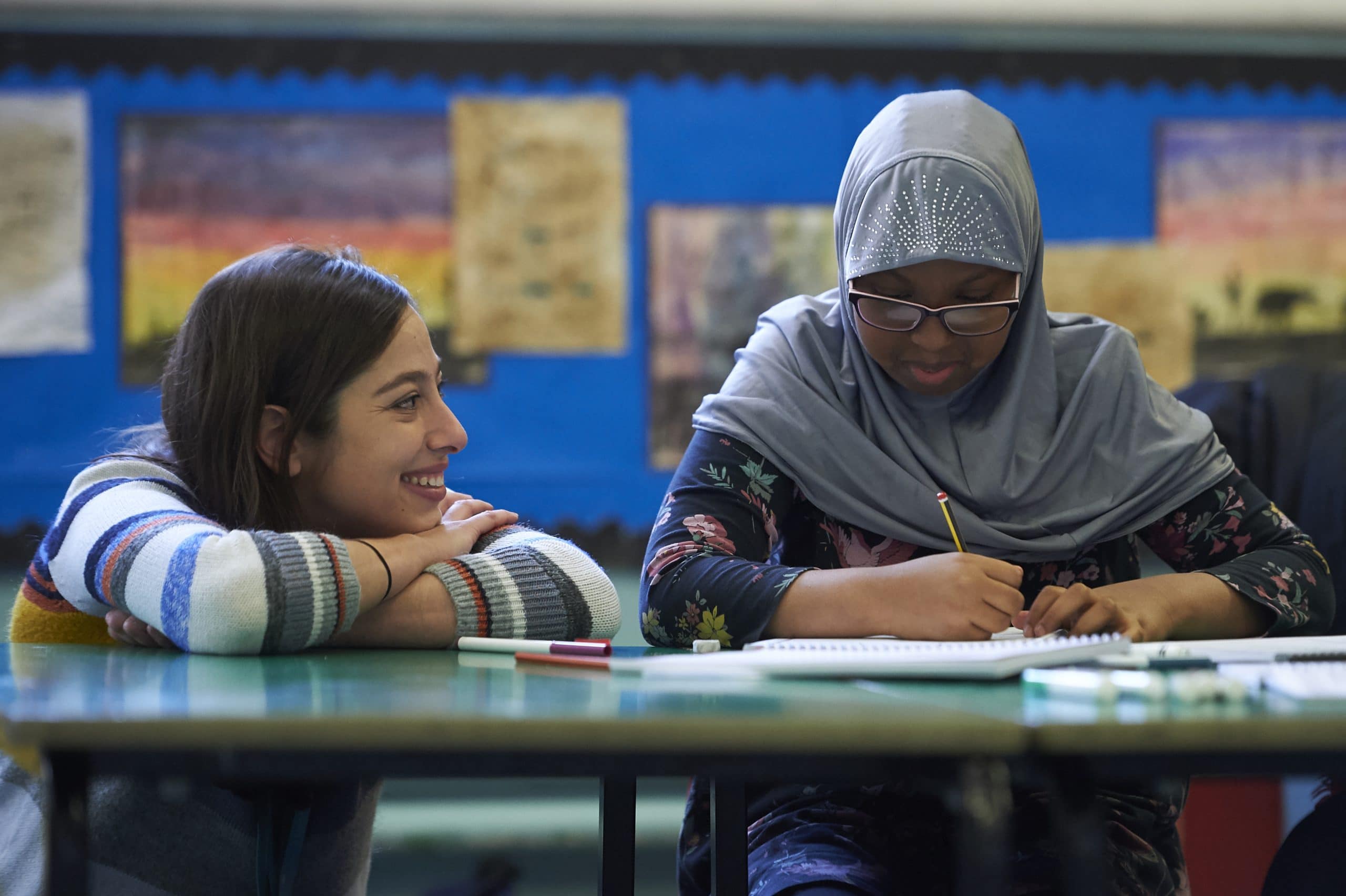
Our new mission statement:
Action Tutoring unlocks the potential of children and young people who are facing disadvantage. We are tackling the attainment gap head-on by forging partnerships with schools nationwide. Our trained volunteer tutors are empowered to enable pupils to make meaningful academic progress, opening doors to future opportunities.
Having a meaningful impact on the lives of disadvantaged pupils requires us to always evaluate our work and reflect on our values. Putting our mission into words allows our charity to have a clear and well-focused vision for our future strategy.
We hope our new mission statement resonates with all of you who have supported us by giving your time to volunteer, donating or simply by spreading the word about our cause. We also hope it inspires new volunteers to join our cause and help us expand our reach.
Our vision as a charity is a world in which no child’s life chances are limited by their socio-economic background.
Tutoring has been proven to be an effective tool in tackling education inequality and making a real difference in the lives of young disadvantaged people. Watch the video below if you’d like to learn more about the impact of our work in 2020-21.
What has changed?
Geography
Since the creation of our first mission statement we have expanded to a number of new areas across the country and will continue to do so over the years. We included ‘nationwide’ to highlight this.
Highlighting our core focus
We specifically reference the attainment gap as this is the core focus of our delivery and also our advocacy work.
Robust training
We have developed a robust training and development model for our volunteers and we wanted to emphasise this and their crucial role in our work.
Inclusive and accessible communication
Lastly, Action Tutoring is proud to be an inclusive, equal opportunities organisation. That’s why we refreshed the language used to be warmer and more accessible.
We also realise that while mission statements can be powerful, they need collective action to make a real difference. Our team is dedicated to our cause and works hard to attract the very best volunteers from the most diverse and widest possible talent pool.
Action Tutoring values
As an education charity, having high standards is our priority. We always strive to maintain professional standards through all of our interactions with partner schools and volunteer tutors and aim to achieve excellence in all we do.
Being reflective is also part of our work culture; we regularly survey pupils, teachers and tutors to help inform improvements to the programme. We are hugely proud of our impact and the programme we offer but are always looking to make it even better.
We do so by being evidence-based and rely on data collection from schools, as well as our own baseline tests and interim assessments, to ensure our support is having an impact.
Since integrity is a core value of our organisation, we always share all pupil progress data with partner schools, even if the outcomes aren’t as hoped, and make our evaluation reports widely available.
In addition, we work hard to develop our training and resources to support our pupils, tutors and staff to be the best they can be. Being aspirational allows us to aim higher and offer further support to those who need it the most.
Lastly, partnerships with schools are at the heart of our model. We also regularly engage with our peer charities and organisations such as Teach First, Impetus and the Fair Education Alliance, to maintain a united force on tackling education inequality. Effective communication and a strong sense of collaboration has enabled us to gain our supporters’ trust and work closely with our partner schools.
Do you want to learn more about Action Tutoring? Read our story here.
We’re committed to ensuring more and more pupils can receive the education they deserve. We thank you all for your continuous support and hard work.
How tutors can support pupils with dyslexia
14 April 2022
One in ten children are diagnosed with dyslexia, a common learning difficulty that mainly causes problems with reading, writing and spelling.
Although children with dyslexia require additional personalised academic support, small adjustments to day-to-day practice can have a great impact on dyslexic pupils’ performance.
Knowing how to better interact, communicate and help dyslexic pupils is an important step to creating an inclusive classroom that promotes a healthier, safer learning environment for all children.
What exactly is dyslexia?
In the UK, children are primarily taught to read through phonics, which teaches
them to link sounds and letters. Experiencing difficulty in accurate and fluent word reading and spelling is the most visible symptom of dyslexia. However, a dyslexic pupil’s brain functions differently and they may not make the same connections between sounds and letters.
Pupils with dyslexia often try to recognise and memorise each word individually, rather than using phonics to decode them. They can experience visual stress and feel overwhelmed by bright colours and some fonts. This exposure can make pupils feel more stressed and lead to loss of comprehension.
How can tutors support pupils with dyslexia?
It’s important to keep in mind that dyslexic pupils are not less able or less intelligent. As dyslexia is often misunderstood or misdiagnosed, it should be clear that it does not affect intelligence or self-motivation.
Be patient
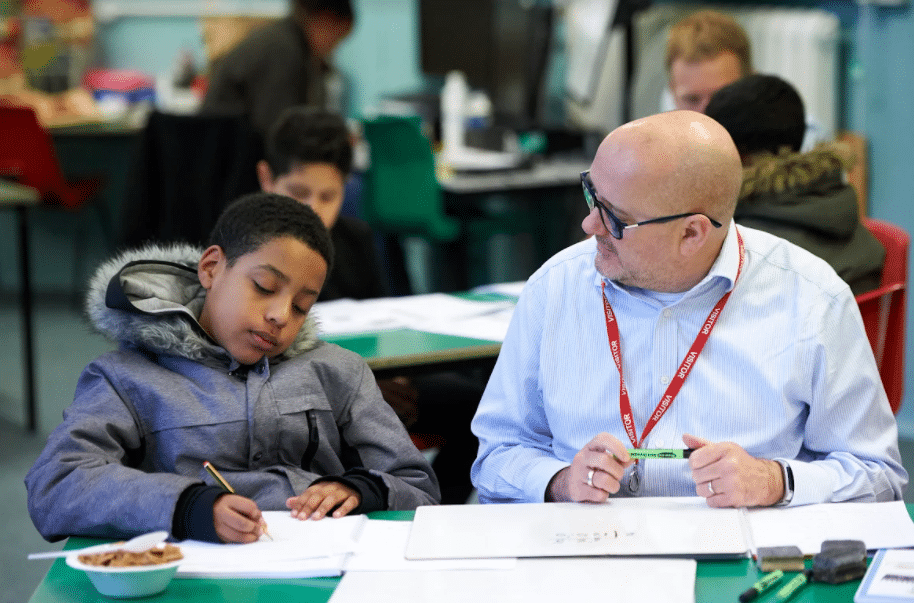
As a general rule, keep in mind that dyslexic pupils need more time to process information and it’s best for them to do so at their own pace. This means that as a tutor, you should never insist that a dyslexic pupil reads out loud if you see them struggling, as they can be more self-conscious about their reading abilities.

Be encouraging
Dyslexic students will have emotional reactions to their learning difficulties, such as embarrassment for reading at a slow pace, lack of confidence due to misspelling words, confusion at not processing the information as quickly, and anger at not keeping up with their peers.
These feelings can create additional obstacles to their learning progress, so as a tutor it is important to always encourage and praise them for their work. This will help them feel emotionally safe during sessions and give them the confidence boost they need in order to show you their skills and talents! Dyslexic pupils can be artistic, athletic, and have excellent problem-solving and reasoning skills.

Don’t be scared to take breaks
Brain breaks are an important part of the tutoring session, because they give pupils the opportunity to focus better and be more productive. It’s a great way to reduce stress and frustration when they are unable to concentrate, engage or retain the information provided.
Cultivate the spirit of independent learning
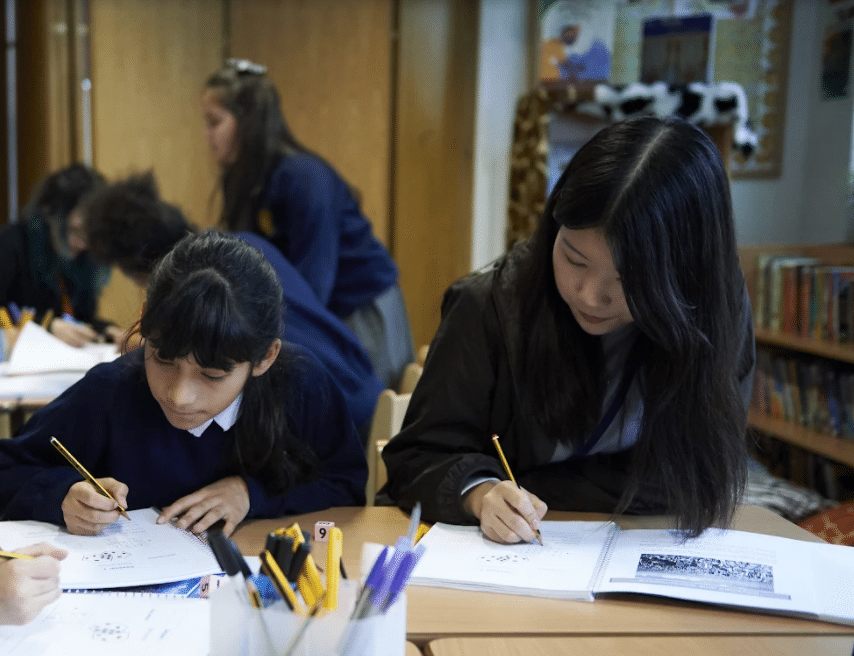
As a tutor, it is essential to not only pass on knowledge, but to encourage pupils to enjoy the subject you’re tutoring. This will ignite their curiosity and motivate them to study independently. Dyslexic pupils might struggle to study on their own, but as a tutor you can help them with this by encouraging independence with the use of diaries, post-it notes and checklists.
What does Action Tutoring do to support pupils with dyslexia?
Our Training and Curriculum team has worked hard to create resources and further training for volunteer tutors to use. Tutors who join our volunteering group can access a series of online short courses called Bright Ideas.
One of them is Dyslexia and provides an overview of what Dyslexia is and suggests some strategies that tutors can use. The strategies are largely focused on how to tutor English, but some of them (for example, supporting pupils who struggle with working memory) will also be applicable to maths tutoring.
Read more: Nervous about your first tutoring session? These tips will help!
If you are part of our volunteering team, our amazing Programme Coordinators are always here to support our volunteer tutors in case they need further support.
By better understanding how dyslexic pupils think and behave, we are better prepared to offer them a more personalised learning experience. All pupils can succeed academically with the right combination of support and nurturing environment.
Volunteering with us can help you learn how to better interact with pupils and give you access to resources that can improve your communication and tutoring skills.
We’d love to hear from you!
How to celebrate World Health Day
7 April 2022
What is World Health Day?
World Health Day is a global awareness day that is celebrated every year on 7th April to honour the fundamental work of the World Health Organisation (WHO). It was celebrated for the first time in 1950, when the World Health Organisation was founded by the United Nations as the leading global health authority.
The mission of WHO is to address and deal with global health issues as well as control and combat diseases across the globe.
World Health Day is used not only as a celebration, but as an opportunity to shine light on the importance of taking care of our body and mind. With all that is going on in our world today, Action Tutoring encourages everyone to take a moment and reflect on the importance of a healthy lifestyle.
How can you celebrate World Health Day?
There are numerous ways for groups, organisations and individuals to commemorate World Health Day. They include creating better habits for your overall physical and mental health; educating yourself more on health issues; organising a local or online event to raise awareness; spreading the word on social media, or donating to charities that champion health, both physical and mental.
1. Volunteer for a cause you care about
Joining a volunteering community you are genuinely interested in can be a great start. Volunteering is an eye-opening experience that reminds us all to appreciate what we have, and practise gratitude.
Why not become a tutor in English or maths? Tutoring is not only an easy and rewarding way to make a difference to the lives of young people living in your community, but an excellent way to do something different and get out of your comfort zone.
One of our our amazing volunteers from Liverpool, Paige, notes that ‘’The impact you can have on a child’s life is one of the most rewarding things any volunteering could offer!’’
What exactly are the health benefits of volunteering?
Volunteering helps counteract the effects of stress, anger, and anxiety. Due to Covid restrictions, we have spent a lot of time isolating at home; this lack of social interaction can increase social anxiety and the feeling of isolation, even with restrictions now lifted. Volunteering is a great way to reduce stress and anxiety by giving you a sense of purpose and helping you gain perspective.

Volunteering is an excellent way to feel happier! Acts of kindness can help increase serotonin, energy, happiness, and your lifespan. The more we give, the happier we feel.
Being a volunteer helps us stay physically active. Research shows that volunteers tend to have a lower mortality rate compared to others. Volunteering can also help with symptoms of chronic pain and minimise the risk of heart diseases.
Older volunteers can incredibly benefit from volunteering since it is a great opportunity to walk more and generally be more active. If you are a retired professional, you can get involved with us as a volunteer tutor and help schools in your community provide better education to vulnerable children.
2. Practice mindfulness
Prioritising mindfulness should be an essential part of our daily routine in order to lead a healthy lifestyle. This allows us to practise the art of making space for ourselves – space to reflect and focus on what’s really important.
Being more present every day and paying attention to your thoughts and emotions, as well as to your surroundings, can greatly improve wellbeing.
3. Start educating yourself, and in turn, educate others
Information is key. World Health Day is a great opportunity to educate ourselves on how to improve our physical and mental health. Why not take some time to think about what your body and mind needs?
There are hundreds of tools online that can help you prioritise health and encourage healthier lifestyles. Do some research and ask others for advice. The more you learn about the importance of taking care of yourself physically and mentally, the more likely you are to take action sooner.
However, it’s essential to keep in mind that our general wellness and health is a year-round subject. Whether it’s some much-needed time for yourself to practise mindfulness or joining a volunteer group, there are numerous steps you can take in order to fuel your body and mind.
At Action Tutoring we have created a safe and inclusive place where our team members, volunteers, pupils and teachers can feel supported, heard and empowered. If you could spare an hour each week to help disadvantaged pupils receive further academic support in English and maths, we’d love to hear from you.
Action Tutoring is proud to receive the Rising Leader 2022 Headspace Award!
4 April 2022
Action Tutoring is happy to announce we have won the Rising Leader award in the 2022 “Headspace for Work” Mindful Workplace Awards!
Headspace, a mindfulness app, makes mediation easy and accessible for everyone through guided audio messages that aim to simplify the concept of meditating. With access to hundreds of exercises on everything from stress to sleep to focus and anxiety, it provides easy to use tools that can be used anywhere.
At Action Tutoring we have created a safe and inclusive working place where our team members are not only encouraged to progress and evolve professionally, but are also supported through any mental health-related challenges that may occur.
Action Tutoring defines success as cultivating a workplace where staff feel able to talk freely about mental wellbeing. We do this by having a mental health and wellbeing working group, which consists of 10% of our employees. They are all trained as Mental Health First Aiders (MFHAs), and offer one-to-one check-ins for any staff who wish to discuss their mental wellbeing. Through this we can prioritise emotional wellbeing and provide the necessary support to those who are struggling.
We began developing our wellbeing program in 2018. It was already well established by the time the pandemic began in March 2020, which as we all know, negatively impacted everyone in different ways. Our charity remained very conscious of the challenges our team was facing, such as anxiety, loneliness from working from home, screen fatigue, grief or sickness.
Adding Headspace for business to our organisation has helped us address mental health issues and support us in breaking the stigma. Our most recent wellbeing survey showed that 81% of staff agree or strongly agree with the statement ‘‘I feel confident talking to my manager about my mental wellbeing.’’
Headspace has not only contributed to supporting those with mental health challenges in our organisation, but also encourages a workplace culture of collaboration, compassion, and gratitude.
We are extremely proud of the award and recognition we have received as a charity, and mental wellbeing will continue to lie at the heart of what we do.
A warm welcome to our new Trustees!
15 March 2022
We are delighted to welcome our two wonderful new Trustees to our Board, Mark Shadrack and Andy Ratcliffe.
They intrinsically understand the importance of quality education for all pupils, no matter their socioeconomic background, and bring a range of experience and knowledge that will shape our future strategy and help us reduce the attainment gap.
Trustees play an important role as they build on our commitment to tackle education inequality and support us to provide further academic support to disadvantaged young people. They help to set our strategy and ensure that our activities and objectives are in accordance with our vision, and ensure we deliver on our mission.
Trustees also support us to ensure that our charity’s resources are managed responsibly. This includes contributing to ensuring that our assets, reputation and people are adequately protected.
‘’Action Tutoring has many exciting and ambitious goals for the next 3-5 years and I’m really excited that Mark and Andy will be a key part of helping us achieve those ambitions, each bringing so many valuable skills and experiences to our team, as well as very importantly a heartfelt passion for the work that we do.’’
Susannah Hardyman, Action Tutoring CEO
Their contributions make a huge difference to the way we work and the impact we have.
A little bit more about Mark and Andy
Mark has extensive experience in finance, governance, and operations across the commercial and charity sectors. Since 2020 he has worked as Chief Operating Officer for the international charity Hope and Homes for Children, having previously been a trustee of the organisation.
Prior to this, Mark enjoyed an international career in finance at Unilever which included leadership roles spanning operations, strategy, and change management.
‘’In my full-time work at Hope and Homes for Children, we believe that every child deserves to grow up with the love and support of a family. In turn, I am inspired by Action Tutoring’s vision of a world where no child’s life chances are limited by their socio-economic background. So I am thrilled to join the organisation as a trustee, and I am looking forward to working with my fellow Board members and the Senior Management team in the next exciting phase of our development. I’m also hoping to try my hand at tutoring!’’
Mark Shadrack
Andy is currently Executive Director of Impact Urban Health. He has spent his career working on how poverty and deprivation affect people’s chances in life in the UK and abroad. He started out as a poverty researcher at Oxford University before moving into government including time as a senior education adviser in the Prime Minister’s Strategy Unit.
Previously Andy was the CEO at Impetus, a venture philanthropy charity focused on social mobility, which was how he first came across our work.
“High quality tutoring can make a massive difference but children whose families can’t afford to pay for a tutor are missing out. That’s why I’m so proud to join the Board of Action Tutoring to support our incredible team to get the best tutoring to more children from disadvantaged backgrounds across the country”
Andy Ratcliffe
Want to know who else is on our board? Take a look here.
Response to House of Commons Education Select Committee Report on Post-pandemic Education: Is the Catch-Up Programme Fit for Purpose?
14 March 2022
In light of the just-released critical report by the House of Commons Education Select Committee highlighting that the country faces an ‘epidemic of education inequality,’ it is more evident that the future of disadvantaged pupils continues to hang in the balance.

Even though school closures significantly disrupted learning for all pupils, the cross-party report found that disadvantaged pupils could be up to eight months behind their peers, pupils spent far less time learning each day, mental health problems for children rose by 60% in the last academic year and schools faced extensive bureaucracy when trying to access funding to support re-opening and educational recovery.
The report also reiterated the apparent inability of the education catch-up scheme, the National Tutoring Programme (NTP), to achieve meaningful targets amid a low level of accountability and transparency by the implementing organisation, Randstad, in its operations. It highlighted that regional implementation of the NTP has seen significant disparities in uptake across the country creating an uneven playing field with the likelihood of widening the attainment gap for schools in the North, Yorkshire and Humber, where it recorded low targets in implementation.
The findings from this report point to the risk of the NTP missing an opportunity to reverse the devastating impact of the COVID-19 pandemic on education, specifically for disadvantaged children. At Action Tutoring, we strongly recommend that the NTP keeps the core focus on supporting disadvantaged pupils to recover from the pandemic and minimise the apparent deepening inequality in education.
Action Tutoring CEO, Susannah Hardyman said, “I am deeply concerned that recent changes to the NTP structure such as removing targets for delivery to pupil premium pupils and allowing group sizes of 1:6 instead of a maximum of 1:3 are only serving to water down the NTP. This risks losing the potential the programme has to benefit less advantaged pupils in particular. The EEFs own evidence suggests that the smaller the group size, the better and we know that it is disadvantaged pupils that have been most affected by the pandemic.”
Greater transparency and accountability are essential to the success of the programme. Stakeholders including Tuition Partners, schools and sector leaders must get access to half termly progress reports and a reliable channel for making enquiries or sharing feedback. Increased accountability and operational transparency will go a long way to improve the impact of the tutoring programme and build a higher level of trust in the NTP’s ability to bridge the gap between disadvantaged pupils and their peers.
Given that take-up of the programme, this year has not been as high as targeted, we strongly recommend that the Department of Education should consider not reducing the subsidy rates next academic year (currently set to go from 70% to 50%), to help increase the take-up in schools and allow more pupils from disadvantaged backgrounds to be covered by the programme. Through that, we can ensure no one is left behind.
Education Secretary Nadhim Zahawi has just announced that up to £65m will be invested into the School-Led Tutoring route of NTP, giving more schools the flexibility and support to deliver high-quality tutoring. While we recognise the important flexibility that the schools led tutoring route gives to schools, we would urge the Department for Education to ensure that the quality benefits that the Tuition Partners pillar brings to the NTP are not lost.
As a Tuition Partner and education charity, Action Tutoring is concerned about other highlights of the report including the looming mental health and wellbeing crisis among children, which has been exacerbated by the pandemic. We support the report’s recommendation for the creative engagement of pupils in extra-curricular activities and community programmes to reduce their over-reliance and time spent on social media, which has wider implications for their mental health.
Notwithstanding the devastating and prolonged impacts of COVID-19 on education inequality, we believe the NTP can be reformed to meet the daunting challenge of narrowing the attainment gap as well as recovering lost learning time for disadvantaged pupils to have a fair chance at achieving their full potential.
More important than ever, this is a pivotal moment to reimagine the best ways our education system can better support the development and well-being of disadvantaged children to create a lasting and transformative impact that will benefit us all. Given this, we hope in particular to see the NTP have a long term, lasting legacy in the UK education system.
International Women’s Day – How do Action Tutoring volunteers promote gender equality in our programmes?
8 March 2022
Celebrating International Women’s Day means raising awareness on gender equality and recognising it as the foundation for a peaceful, prosperous and sustainable world. ((https://www.un.org/sustainabledevelopment/gender-equality/))
Initiatives to promote gender equality in and through schools are critical in raising a generation of girls and boys who understand equality, respect and fairness in society. Education plays an important role in transforming social structures and promoting economic and cultural progress.
This day is a great opportunity to raise awareness of the significance of female empowerment. We can empower young girls to be strong and confident, and teach boys to recognise, celebrate, and embrace that empowerment.
At Action Tutoring we believe that gender equality is an essential component of quality education. Our tutors have enormous potential to address gender inequality issues and end the preservation of toxic behaviours.
How exactly do our tutors encourage a healthy, equal and sustainable future for our pupils?
Our educational resources are free from gender stereotypes
The curriculum is a powerful tool for social change, since it can shape beliefs and values at an early age. Our workbooks and education resources are used as a tool to transfer knowledge in an effective and efficient manner.
Our team has worked hard to ensure that the learning material volunteer tutors use nurture the minds of young people we support, without stereotypes and gender biases.
Our tutors do not refer to stereotypical characteristics
Children are not born understanding what it means to be a ‘boy’ or a ‘girl’. This means that their family, school and community impose gender stereotypes and social expectations on them from an early age.
Our optional “Bright Ideas” training sessions provide volunteer tutors with materials that prepare them to better handle conversations regarding gender or social expectations. Stereotyping and prejudice can affect pupils’ view of themselves, including what subjects a pupil thinks they are ‘naturally good at’ or ‘naturally bad at’. For example, historically, there has been a widespread belief that ‘male brains’ and ‘female brains’ are different and that men and women therefore have naturally different skill sets and aptitudes.
With this in mind, we need to be incredibly careful when we communicate with young people in order to avoid stereotyping, such as ‘women stay at home to take care of their family’ and ‘men don’t cry’. Our volunteer tutors use educational activities in such a way that encourage critical thinking and teamwork.
In particular, one session available for our volunteers includes Managing conversations about prejudice, stereotypes and inequality. It explores how prejudice, bias and stereotypes can impact pupils, and provides strategies to try if challenging conversations around these topics arise. This way, we want our pupils to develop a growth mindset, where they see skills as things that can be learnt and developed over time using effort and resilience, rather than something innate that cannot be changed. Avoiding stereotyped ways of thinking and communicating is an important part of this.
As children grow into adults, it is critical that they feel supported in order to pursue their passions later in life and never allow gender stereotypes to limit their options.
Our female tutors serve as role models
We understand how critical strong female representation is for young girls. It encourages the confidence to have bigger goals and aspirations in life. With strong female role models to look up to, young girls are better equipped to end the cycle of inequality and use education as a tool that opens new doors for them.
One of our pupils, Bella, is in Year 11 at King Ecgbert School in Sheffield and is tutored by our fantastic volunteer Sophie. She is receiving tuition in English and mentioned how much more confident she now feels in class. Bella thinks that tutoring is more personalised, and she’s not scared anymore to ask questions and engage with her tutor. What’s more significant is Bella’s wish for her future: ‘’I’d like to be really successful and run my own business one day.’’
Young girls like Bella need to be supported and encouraged to pursue their dreams and become confident young women later in life, so that they can help others when the time comes.
International Women’s Day is also an opportunity to recognise the incredible bravery, resilience and strength of ordinary women and men who fight daily against toxic patriarchal norms and promote equality and fairness.
Lastly, it’s a day to show our gratitude to our female volunteers who are amazing at what they do and have helped us make a difference in the lives of so many young people.
Let this day be a reminder that great change comes from the efforts of one person at a time.
What does the EPI report show about the impact of the pandemic on disadvantaged pupils?
17 February 2022
The Education Policy Institute (EPI), an education policy think tank that aims to promote high-quality education outcomes through research and analysis, has released a significant report highlighting the impact of the pandemic on disadvantaged pupils.
The report studies the education gap in 2020 at a national level and among varying levels of disadvantage. The findings help us better understand the inequalities in education and the importance of taking the necessary measures in order to alleviate the concerning gap.
What do the EPI findings reveal about the disadvantage gaps?
The disparity in academic performance is one of the most critical challenges our education system currently faces in England.
The gap between disadvantaged pupils and their peers at key stage 2 (primary school) and key stage 4 (secondary school) is a key measure to assess pupils’ performance. Typically, indicators of attainment gaps at both primary and secondary levels have been based on comparing the percentages of pupils in each group achieving an expected standard – specifically, expected standard in reading, writing, and maths at the end of key stage 2, and five good passes including English and maths at GCSE.
This education inequality is demonstrated in the EPI findings. Specifically, the report shows that the gap in GCSE grade attainment between pupils from low-income families and their peers has not improved in the last decade. Instead, poverty levels have now risen due to the pandemic and more disadvantaged young people are unable to receive the academic support they need in order to catch up.
If you’re a child from a low-income family, you’re less likely to achieve the GCSE grades needed to progress to further education, employment or training. The attainment gap particularly increased for pupils in college and sixth form in 2020: disadvantaged young people are now 3.1 grades behind their more affluent peers, ((COVID-19 and Disadvantage gaps in England 2020)) compared to 2.9 grades in 2019.
The EPI fears that the disadvantage gap in education may widen further in schools as more and more pupils fall into longer term poverty. The persistent rising of poverty among disadvantaged pupils is linked with the stalling of progress in closing the attainment gap. This makes the question of increasing social mobility more urgent than ever.
‘’Worsening poverty has had what the EPI report is right to call a ‘decisive’ impact on the education of children and young people. 4.3million children – or nine in a classroom of 30 – are living in poverty. This speaks of untold hardship endured the length and breadth of the UK.’’
Dr Mary Bousted, Joint General Secretary of the National Education Union
Making sure disadvantaged young people are academically supported is the first step towards ending the cycle of poverty. Action Tutoring partners with schools in England and with the help of our motivated volunteer tutors, delivers tailored and personalised support to disadvantaged pupils across the country.

We are proud to support a strong community of inspiring volunteers, dedicated to giving disadvantaged pupils the opportunity they deserve to thrive in life.
Read more: Achievement in the face of adversity – celebrating GCSE results!
How can you help?
The government is being called on to prioritise closing gaps in attainment for the most vulnerable pupils in disadvantaged areas of the country.
However, their plans to reduce education inequalities are only possible if we all contribute by offering our help during these difficult times. It is our collective responsibility to ensure disadvantaged children are supported and given the opportunity to progress in their education. Volunteering has the potential to make a real difference in the lives of vulnerable communities.
We can all be part of this positive change if we spare an hour each week to volunteer as a tutor in English or maths. Let’s help pupils achieve their full potential.
If you are unable to volunteer, you can still offer your help by sharing our mission on social media. Small acts of support can lead to a great positive change!